Is DJing a Real Career? Work, Skills and Getting Started in Saigon
Is DJing a real career? Yes — but it rarely looks like the version people picture, with one big name flying from festival to festival. For most working DJs it is a craft job: playing club shifts, events and private parties, building a reputation one booking at a time, and often combining performing with teaching, production or content. If you are thinking about turning a hobby into work — or you have just moved to Saigon and want to finally learn properly — here is what the job involves and how to start.
What does a DJ actually do?
DJ stands for disc jockey: originally the person playing records on the radio or in a dance hall. Whatever the gear today — vinyl, CDJs or a controller — the job comes down to three things: choosing the right track at the right moment, joining tracks together seamlessly (matching tempo, balancing levels, changing tracks on the right phrase) and reading the room to steer the energy of the night.
There is more than one way to make that a living:
- Club and bar DJs. Residents play regular shifts at one venue; guests are booked for a night. Evening work, on club-standard gear such as Pioneer DJ CDJs and mixers, keeping a floor moving for hours.
- Event and brand DJs. Launches, company parties, product events, festivals. You need range across genres, perfect timing and the ability to work with an MC, organisers and sound crew.
- Wedding and private-party DJs. Mixed-age crowds mean a wide library and real crowd-reading skills.
- Livestream and social media DJs. Filmed sets and short videos are now both a stage and a calling card that venues and promoters look at.
- Producer-DJs. Making your own tracks and remixes is what sets many DJs apart and opens bigger stages.
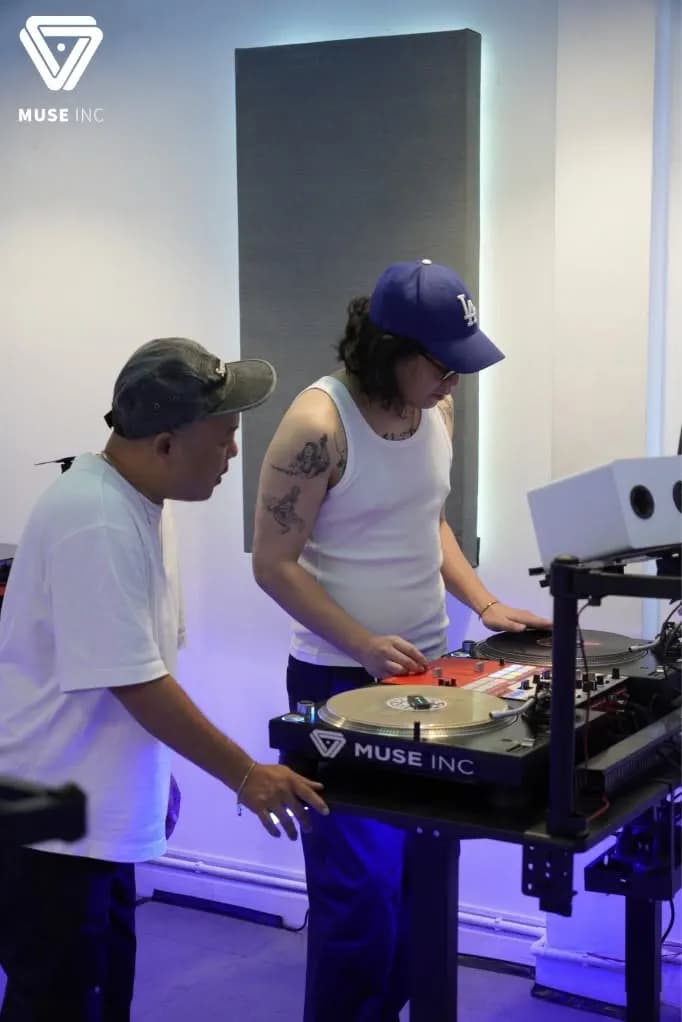
Knowing the craft also leads to work away from the booth: teaching, sound engineering and event tech, equipment rental and repair, event production, artist management and booking. At Muse Inc, alongside the school, the team runs equipment rental for events, sound installs for venues, gear repair and mapping, and a DJ booking service — all jobs for people who understand DJing. One example close to home: DJ Zackie was one of the school's first students, has played clubs, bars and festivals, and now teaches here.
The skills that get you booked
Learning to mix a few tracks cleanly is achievable for most people with a good teacher and regular practice. Doing it reliably, in front of a real crowd, night after night is the actual job. That takes:
- Beatmatching by ear. Sync helps, but when gear misbehaves or a track drifts, your ears save the set. It is the base of every DJ mixing technique.
- Understanding song structure, so your transitions land on the phrase instead of stumbling.
- Confident use of the mixer: EQ, gain, filters, loops, hot cues and effects — used with restraint.
- A well-kept library and your own taste, current enough for the crowd, personal enough to be recognisable.
- Reading the crowd, which is what separates a DJ from an automated playlist.
- Knowing the gear and handling problems: CDJs, mixers, controllers, turntables; rekordbox, Serato and Traktor; what to do when a USB fails mid-set.
- Professional habits: punctuality, clear communication with venues, booth etiquette at changeovers, self-promotion and looking after yourself on a night-time schedule.
Do you need a qualification?
No. There is no degree or formal licence you need to work as a DJ. Venues and promoters listen to your demo mixes, watch your performance videos and ask people they trust. In the booth, you are judged by what the room hears.
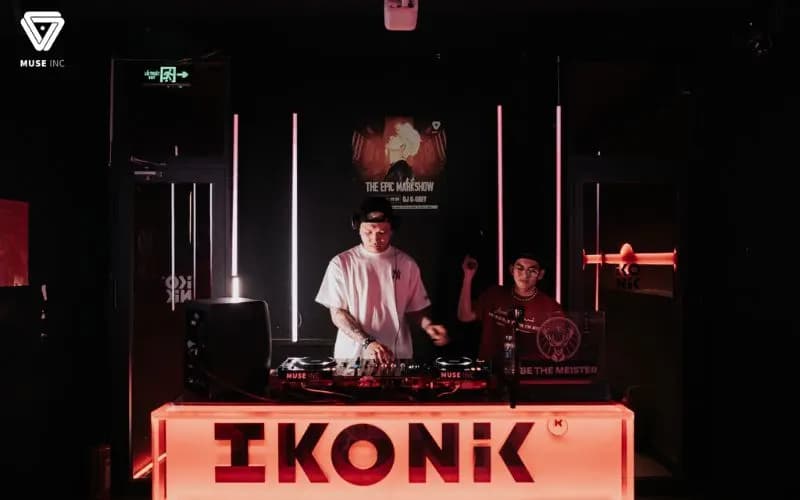
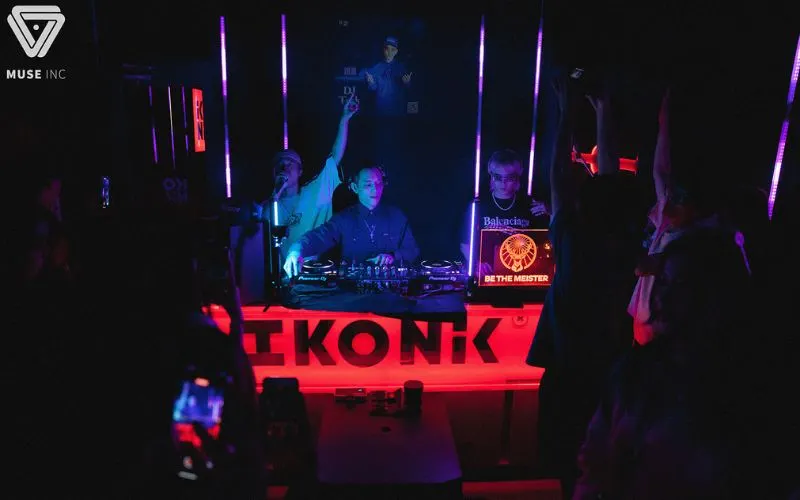
A structured course still earns its keep: you cover the fundamentals in the right order, a working DJ corrects your mistakes before they become habits, and you finish with proof of serious training. The Comprehensive DJ Course at Muse Inc ends with a certificate that can be checked by QR code and a graduation set at Markshow in front of an audience and judges — and the video of that set often becomes a new DJ's first portfolio piece.
Will you find work after learning?
Honestly: no school can guarantee you gigs, and you should be wary of any that does. Whether you find work depends on your skill, how consistently you practise, the people you know and how professionally you behave. The usual path looks like this:
- Practise until your mixing is consistent, then record a few polished demo mixes.
- Take small gigs — friends' parties, small bars, warm-up sets before the main DJ.
- Land regular slots at one or two venues and start getting referred for events.
- Build your name and branch out into bigger events, production or teaching.
Two of our guides go deeper: from bedroom DJ to club DJ in 7 steps and what you need to land your first DJ job.
A good school shortens those first steps. The final stage of the Comprehensive course covers performance and career — DJ changeovers and troubleshooting, crowd reading, stage presence, self-promotion — and the last lesson is career orientation. After graduating you can keep practising in the studio, join school events such as Markshow, Muse Allstar, Asian Jam and workshops, and get booked through the school's DJ booking service. The school also connects students with partner bars and clubs. Since 2017 Muse Inc has trained more than 350 DJs, and graduates play clubs, events and brand nights across the city.
If you are not Vietnamese and plan to take paid gigs here, check the visa and work-permit rules for your own situation before you start accepting bookings.
What about the money?
Most DJs are paid per shift or per show rather than a monthly salary, so income varies widely with the type of work, your experience and name, your network and extra skills like production or teaching. We break down reference figures and how DJs grow their income in how much DJs earn.
Learning in Saigon, in English
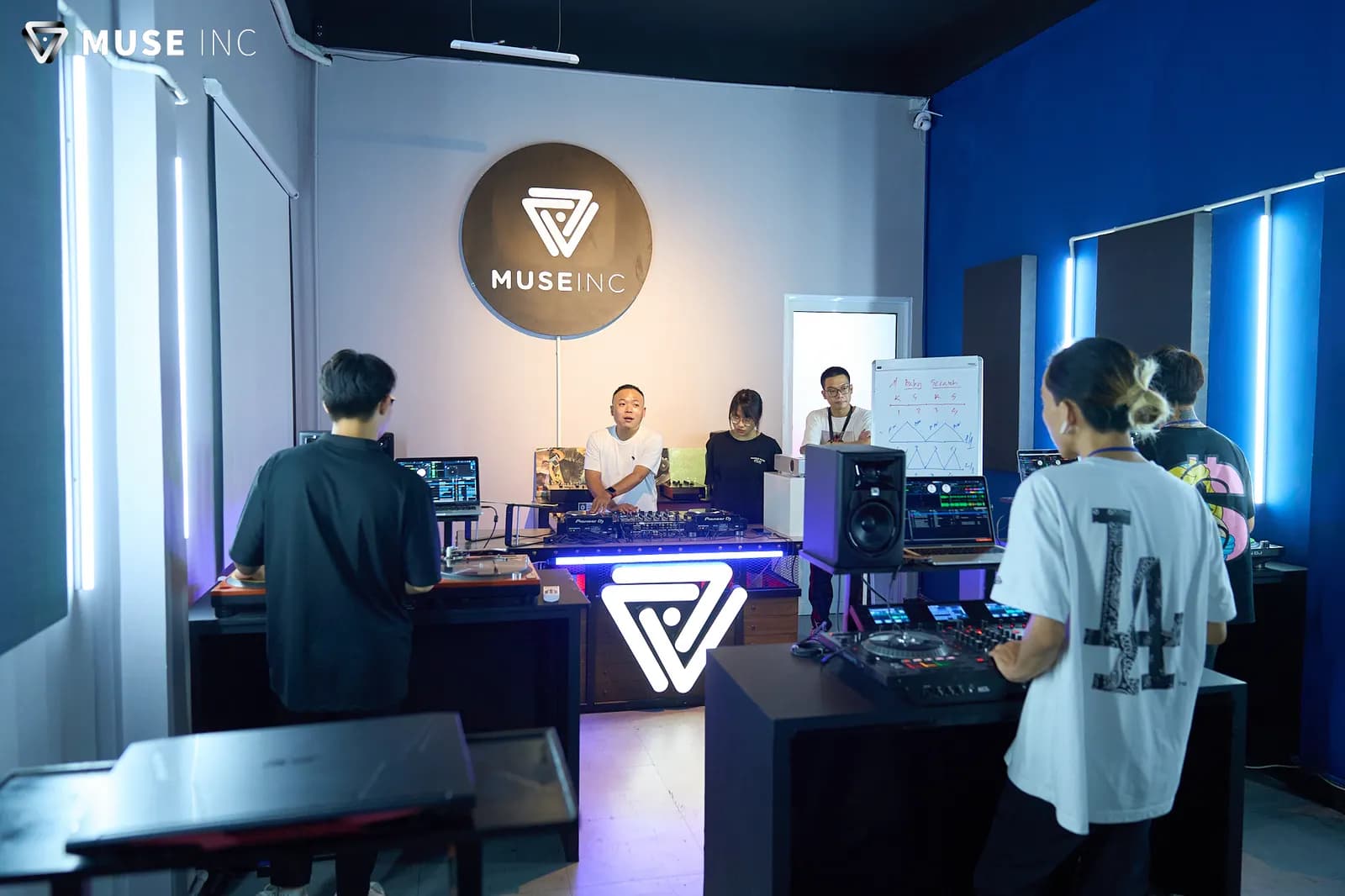
Lessons at Muse Inc run in Vietnamese and in English for international students, and the lesson slides in your student account come in both languages. You do not need your own gear: in the studio you learn on the school's CDJ-3000, DJM-A9, controllers and turntables. For online lessons you need a laptop and a controller. The school is at the back of 409 Hai Bà Trưng, Xuân Hòa ward (District 3), open 9:00–21:00 every day.
Where to start depends on your goal:
- Just curious? Book the free trial lesson, then try Level 1 — Basic DJ: 9 lessons over about three weeks, from 8,000,000 VND in a group or online, 9,500,000 VND one-on-one (approximately $310–365).
- Serious about working as a DJ? The Comprehensive DJ Course takes about three months: 33 lessons plus 33 practice sessions with a teaching assistant in the studio. It costs 38,000,000 VND one-on-one (approximately $1,460), 30,000,000 VND in a group of 4–6 (approximately $1,150) or 24,000,000 VND online (approximately $920).
0% instalments are available — ask us about the terms. Every course and format is on the price list.
FAQ
Yes. Club residents, event and wedding DJs, producer-DJs and DJ teachers all earn from it. Most are paid per shift or show rather than a fixed salary, so it works more like freelancing than an office job.
No formal qualification is required. Venues judge your mixes, videos and experience. A course certificate shows you trained seriously, but it never replaces skill.
You can learn the basics in Level 1 — 9 lessons over about three weeks. Going from zero to a full graduation set takes about three months on the Comprehensive DJ Course, with regular practice between lessons.
Yes. Lessons are available in English for international students, and lesson slides come in English and Vietnamese.
No. You learn on the school's club gear, and you can book practice rooms by the hour between lessons. Only online students need a laptop and controller at home.
The quickest way to find out whether DJing is for you is to stand behind the decks. The first lesson of the Comprehensive course, "Introduction to DJ", is a free trial lesson on CDJ-3000 and DJM-A9 with a teacher. Message us on Zalo at 0902 957 911 to book a time, or drop by — 9:00–21:00, every day.