Learning to Mix as a DJ: Why It Matters and 10 Core Techniques
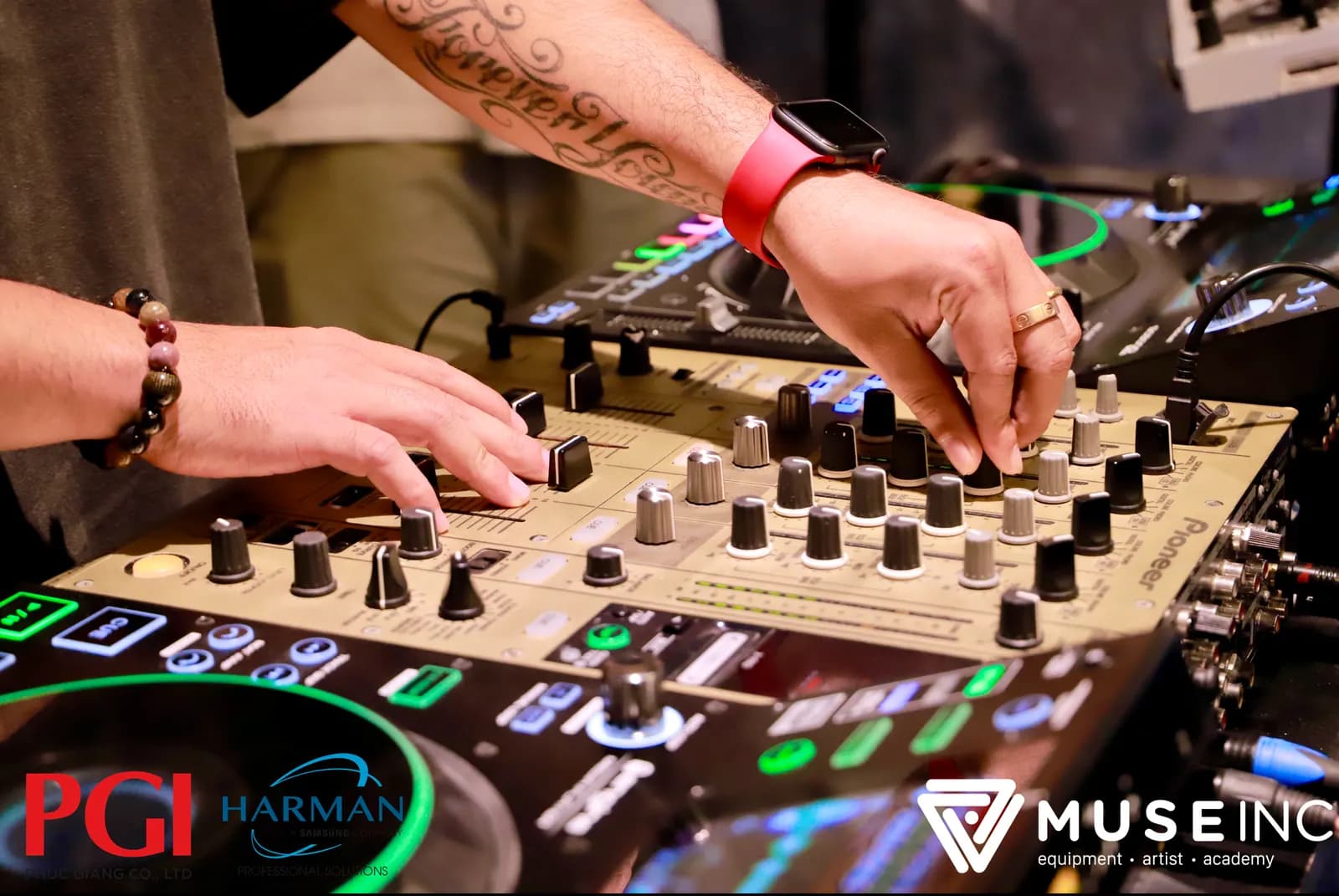
Anyone can find a great track and press play. What makes a DJ is how the tracks are joined: in time, on the phrase, at the right moment for the room. That is mixing, and learning to mix is the first real milestone for every DJ. Here is what we teach students at Muse Inc every day — what DJ mixing is, why it matters, the 10 techniques to learn first, the mistakes almost every beginner makes and how to practise so you improve quickly.
What is DJ mixing?
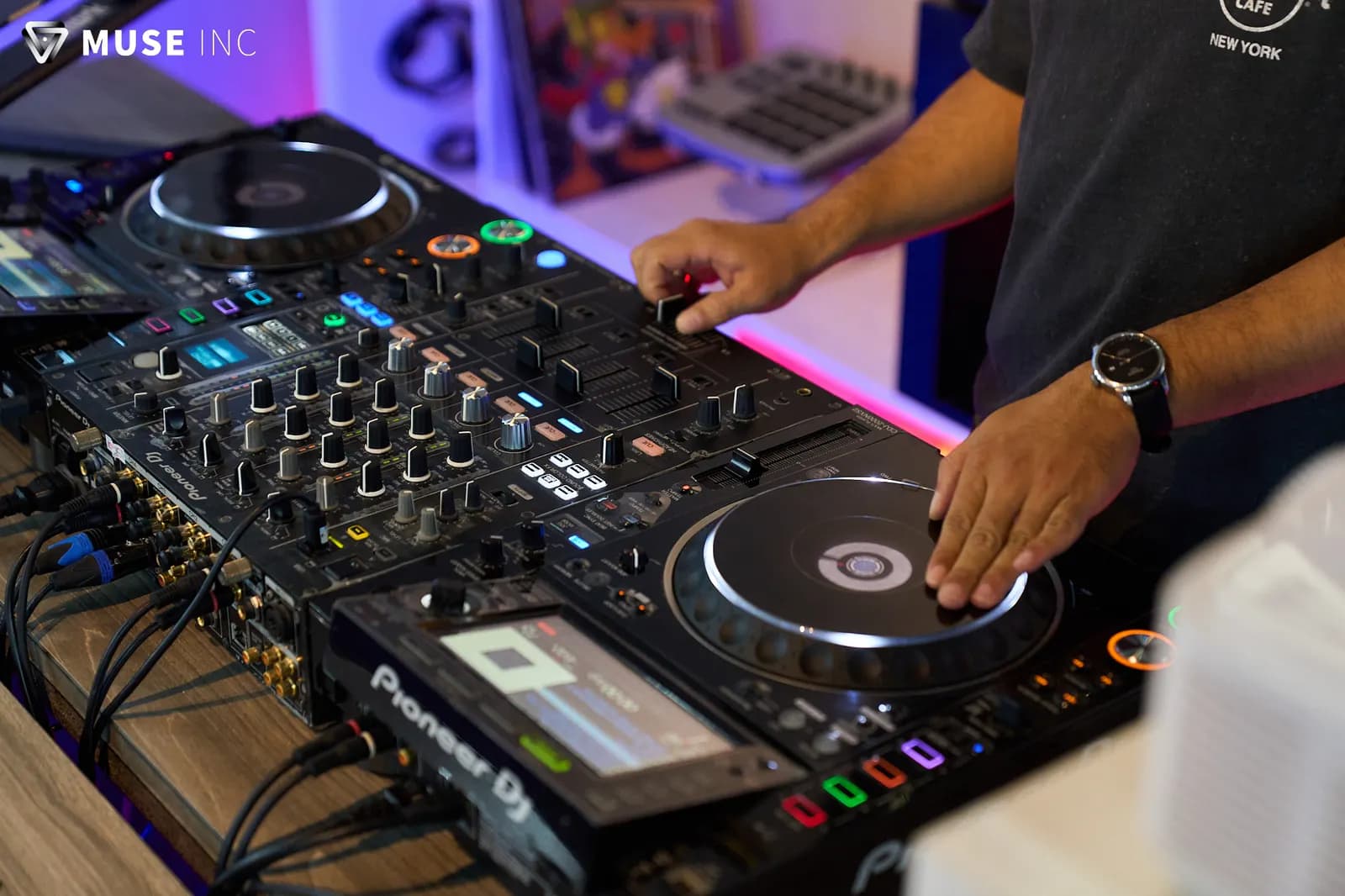
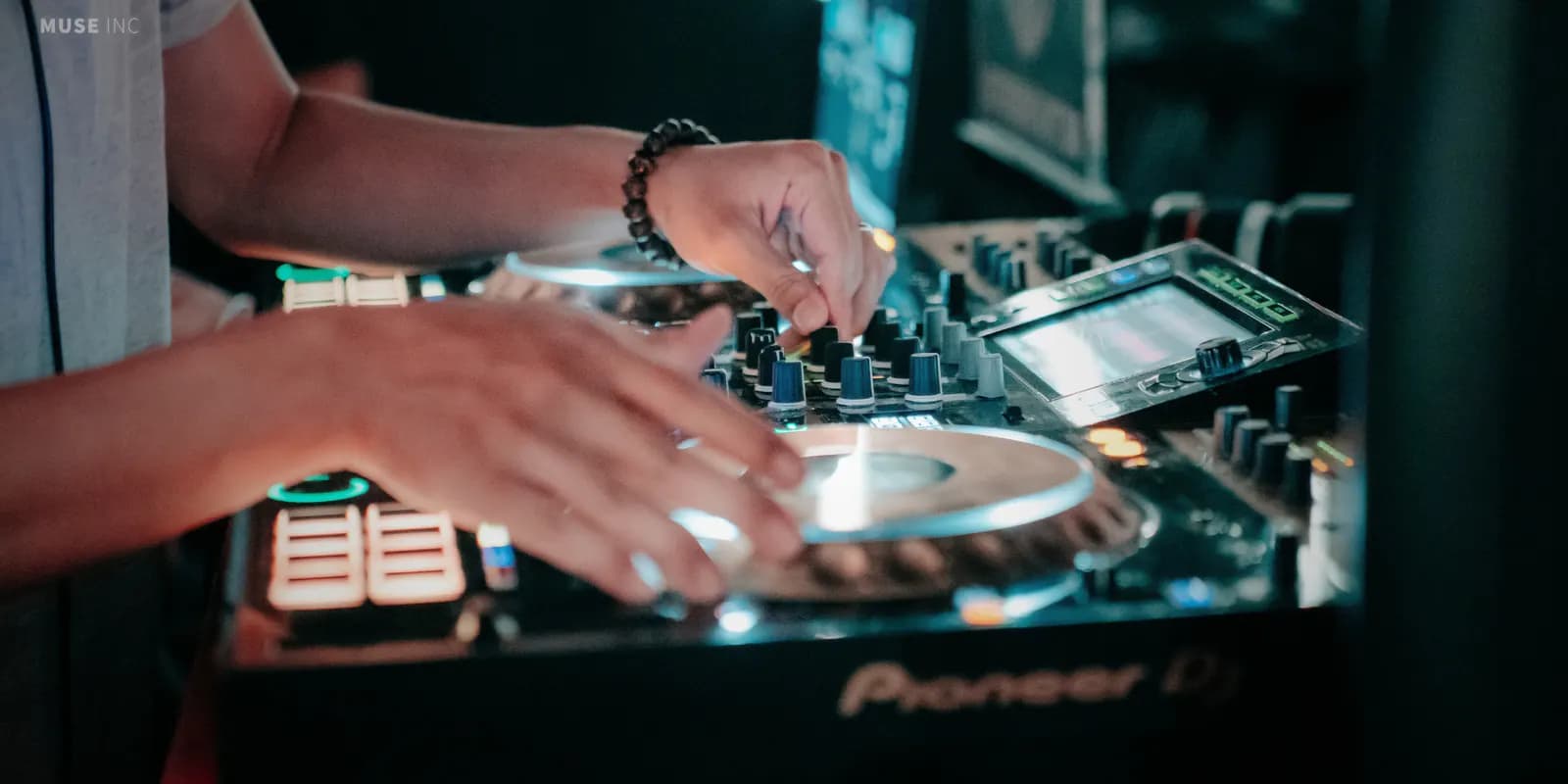
DJ mixing means joining two or more tracks live so the listener hears one continuous flow. A good transition needs four things: both tracks running at the same tempo with the beats lined up, the new track starting at the top of a phrase, frequencies that do not clash, and — most important — the right next track for the moment.
It is not the same as studio mixing (balancing the parts of a song before release, an engineer's job), and it is not automix or a playlist with a crossfade.
Why mixing skills matter
Old-school vinyl DJ or modern controller player, nobody skips this skill. Eight reasons, in short:
- It is the DJ's signature. Since the days of disco, funk and hip-hop, blending records into something new has defined the craft.
- Technology helps, but it does not mix for you. Loops and key lock on CD players, then software with sync and waveforms, free your hands to be creative — the decisions are still yours.
- It separates a DJ from a playlist. Automix can join tracks, but it cannot feel a room. People can stream any song; they come to a DJ for the way the songs are put together.
- It lifts the crowd. A tempo push, a vocal layered on top or a well-placed effect on a familiar hook can pull people onto the floor.
- It makes you stand out when you share a line-up with DJs who have great record collections.
- It lets you take risks, pairing tracks nobody expected and creating the moments a crowd remembers.
- It keeps you genuinely playing, not pretending to twist knobs or scrolling your phone between tracks.
- It gives you control — remixes, mashups, extending or pushing a section — so the whole set tells a story.
10 core mixing techniques
Roughly in the order beginners should learn them, each with a quick drill.
1. Beatmatching
Bring two tracks to the same tempo (BPM) and lock their beats together using the tempo fader, nudging the jog wheel and cueing the incoming track in your headphones. Learn it by ear before you lean on sync — we explain why in why beatmatching by ear matters.
Drill: switch off sync, cover the BPM display and match two house tracks until they hold together for a full minute.
2. Phrasing
Most dance and pop music is built in phrases of 8, 16 or 32 beats. Start the new track at the top of a phrase and its build-ups and drops land where they should. It starts with knowing the song structures every DJ should know.
Drill: count beats out loud through a track and mark every section change.
3. EQ
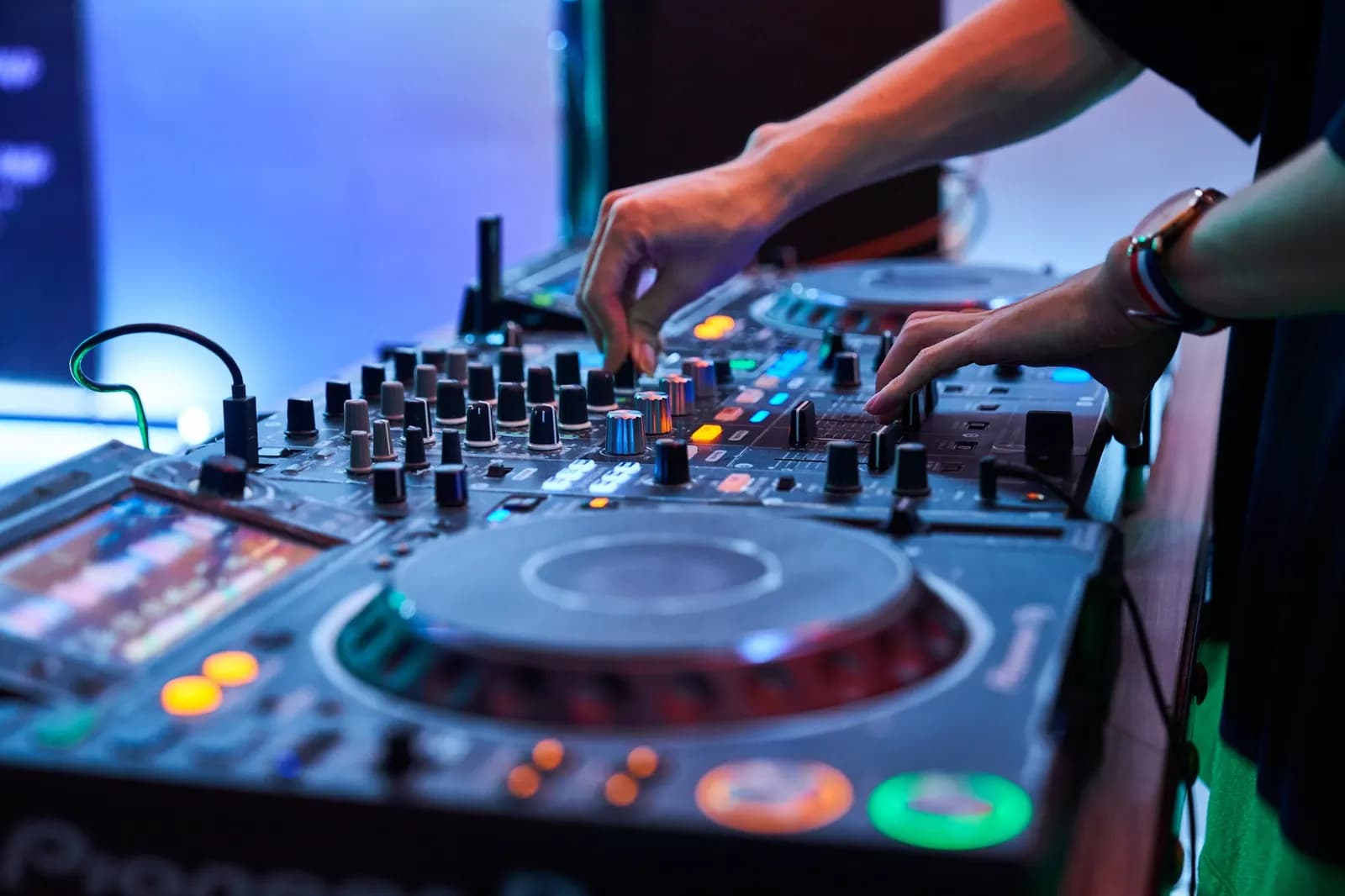
Each mixer channel has low, mid and high EQ. Two basslines at once sound muddy, so the first move to master is the bass swap: cut the bass on the incoming track, then swap basslines at the top of a phrase.
Drill: practise bass swaps on the first beat of a new phrase with different track pairs.
4. Gain and levels
Gain sets each channel's input level; the fader controls volume in the mix. Match both tracks on the channel meters before a transition and stay out of the red — distortion sounds bad and is hard on speakers.
Drill: check meters and headphones before every transition.
5. Filter
The filter gradually cuts the highs or lows, so a track seems to open up or sink away. Use it to ease a track in or build tension before a drop.
Drill: do one transition with the filter only, one with filter plus EQ, and compare.
6. Loops
Repeat 1, 2, 4 or 8 beats to stretch an intro or outro when you need more time, or roll a loop to build energy into the next section.
Drill: set an 8-beat loop on the outgoing outro and use the extra time to match the next track.
7. Hot cues
Mark key points — the start, the vocal, the drop — and jump to them instantly for precise, creative entries. On Pioneer DJ gear, see the 6 cue buttons on Pioneer DJ.
Drill: set hot cues on ten tracks in rekordbox before exporting to USB, then practise entering tracks from them.
8. Transitions
Long blends for house and techno, quick cuts on the beat for hip-hop and pop, echo-outs, drop swaps. Once you are comfortable, learn harmonic mixing with the Camelot wheel so layered tracks stay in key.
Drill: record a three-track mix using a different transition each time.
9. Effects
Echo, reverb, delay and flanger can make a transition more interesting or cover a gap. The rule: less, and on time. Overused effects are the clearest sign of a beginner.
Drill: pick one effect, such as echo, and use it only on the last beat of a phrase.
10. Scratching
Moving the record (or jog wheel) with the crossfader to make rhythmic sounds — the heart of hip-hop and turntablism. Start with the baby scratch, then work through the scratching techniques worth knowing.
Drill: practise baby scratches over a slow beat before speeding up.
Common beginner mistakes
- Relying on sync and watching waveforms instead of listening.
- Letting two basslines run together.
- Pushing levels into the red.
- Starting tracks off the phrase, so drops land mid-sentence.
- Overusing effects and filters on every transition.
- Only practising with the same few familiar tracks.
- Never recording and listening back.
- Forgetting the crowd and playing only what you like.
How to practise
Short and regular beats long and occasional. Give each session one goal — beatmatching today, bass swaps tomorrow — and record everything so you can listen back the next day.
If you practise on a controller at home, spend time on club gear too, because CDJs and a separate mixer feel very different. Muse Inc rents DJ practice rooms by the hour in District 3, open 9:00–21:00 every day, and anyone can book:
- 250,000 VND/hour (approximately $10): Pioneer XDJ-RX3 or XDJ-XZ rooms, price for two people, plus 50,000 VND/hour per extra person.
- 350,000 VND/hour (approximately $13): CDJ-2000NXS2 + DJM-900NXS2, or a vinyl room with turntables.
- 450,000 VND/hour (approximately $17): private CDJ-3000 + DJM-A9 room for up to four people.
Bring your own headphones (6.3 mm or 3.5 mm jack) and music on a USB exported from rekordbox, or your laptop for controller practice.
If you would rather learn with a teacher who fixes mistakes from day one, two courses fit — both available in English:
- Level 1 — Basic DJ: 9 sessions over about three weeks (8 lessons and a final contest) covering gear and software, BPM and beatmatching, cueing in headphones, EQ, phrasing, transitions, crowd reading and your first 15-minute set. 9,500,000 VND one-on-one (approximately $365), 8,000,000 VND in a group of up to four or online (approximately $310).
- Level 3 — Advanced DJ: 12 lessons following on from Level 2 (Intermediate) — scratching (baby, drops, chirps, stab, transformer), beat juggling, mixing on vinyl, switching DJs and troubleshooting, reading the crowd, performance, self-promotion and your career. 15,000,000 VND in a group or online (approximately $580), 17,000,000 VND one-on-one (approximately $650).
Lessons run on club gear — CDJ-3000, DJM-A9 and controllers — with rekordbox and Serato DJ Pro, so you do not need to buy anything to start.
FAQ
Most beginners need a few weeks of lessons and regular practice to make basic transitions reliably. Level 1 is 9 lessons over about three weeks; mixing confidently in front of a crowd takes more practice hours and real gigs.
Not at first. You learn on the school's gear and can rent practice rooms by the hour. Once you know you will stick with it, ask your teacher what to buy.
Learn to beatmatch by ear first. Sync is handy once you understand what it is doing, but it will not save you when gear fails or a track's tempo drifts.
Apps and software are fine for learning the concepts, but real jog wheels, faders and EQ knobs feel very different, so move to a controller or club gear as soon as you can.
The fastest way to find out if mixing clicks for you is to try it. The "Introduction to DJ" lesson is a free trial lesson with a teacher, on club gear, in English if you prefer. See every course on the price list, or message us on Zalo at 0902 957 911 to book your trial. 0% instalments are available — ask us about the terms.