How Much Do DJs Earn? What Shapes a DJ's Income
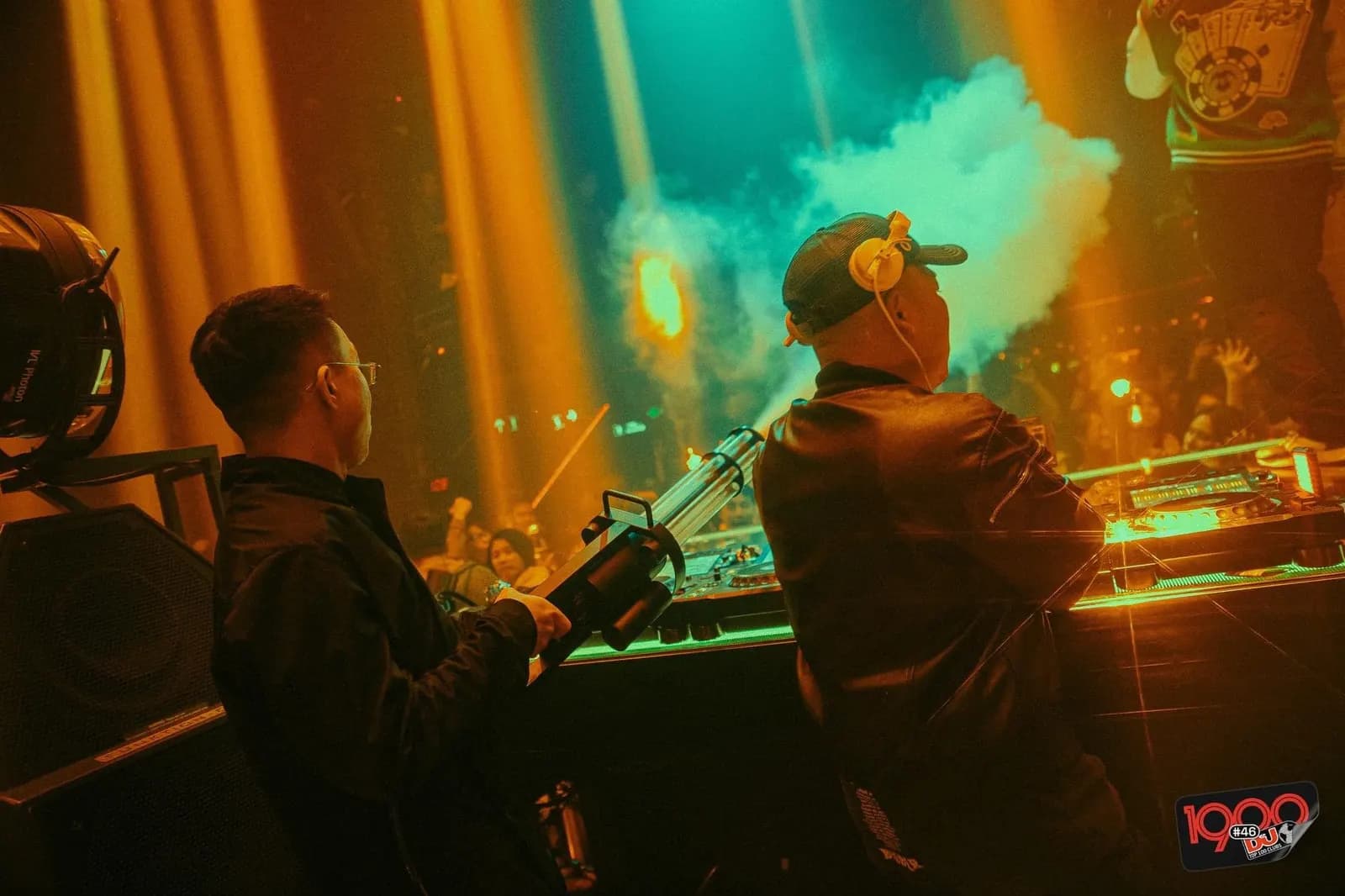
How much do DJs earn? Ask around and you will hear two stories: that DJs make easy money for a few hours' work, or that it is an unstable party job that never really pays. The truth sits in between. As teachers who still play out, here is what we can tell you about fees in Vietnam, why incomes vary so much and how DJs build their earnings over time.

DJ fees in Vietnam: reference ranges
First, the key point: most DJs do not earn a salary. You are paid per shift (a set at a bar or club) or per show, so "what does a DJ make a month" really means "how many paid slots did you play".
Reference figures — they vary by venue, timing and experience:
- Regular shifts at a bar or club: around 500,000–3,000,000 VND per shift (approximately $19–115).
- Event shows: typically around 5–10 million VND per show (approximately $190–385).
- Well-known DJs: tens or even hundreds of millions of dong per show.
- Festivals: the best-paid slots, but almost entirely reserved for established names with plenty of experience.
These are not set rates. A small bar and a big club pay very differently for the same shift, newcomers usually start at the low end, and many DJs play their first sets for very modest fees just to gain experience. Monthly income is simply shifts times fee, plus one-off shows and other work — and it changes month to month, so budgeting like a freelancer is part of the job.
Where the money comes from
- Club residencies. Regular shifts at one or a few venues — usually the steadiest income, and where you sharpen your skills in front of a real crowd every week.
- Events and brand work. Launches, company parties, product events. Higher fees per booking than a club shift, but irregular, and you need range, punctuality and teamwork with MCs and organisers.
- Weddings and private parties. Wide-ranging crowds and libraries; some of these gigs need you to bring or rent your own sound, so price that in.
- Festivals and international gigs. The top of the ladder, usually reached with your own music and a solid following.
- Off-stage income. Production and remixes, teaching, livestreams and content, brand collaborations. Many DJs combine several streams to smooth out the quiet months.
Why two DJs can earn very different amounts
- Experience and reliability. DJs who handle anything in the booth get trusted with the important nights.
- Name and image. The more people come for you, the more value you bring to a venue — and the higher your fee.
- Network. Most bookings come through referrals from other DJs, venue owners and promoters.
- Range and crowd reading. Playing clubs, events and weddings well means more chances to be booked.
- Production skills. Your own tracks are the clearest way to stand out and step onto bigger stages.
- Professionalism. Turning up on time, keeping your word and respecting other DJs decide whether you get called back.
What the world's top DJs earn
The headline numbers you hear come from a tiny group at the very top. On Forbes' 2019 list of the highest-paid DJs (pre-tax earnings over 12 months), The Chainsmokers led with about $46 million, followed by Marshmello at about $40 million and Calvin Harris at about $38.5 million. Calvin Harris had topped that list six years in a row, from 2013 to 2018. Forbes also reported that Steve Aoki played more than 200 shows that year.
The useful lesson is how that money is made: long-term residencies at Las Vegas nightclubs, touring, music sales, royalties and brand deals. The biggest earners all have their own music and a strong personal brand. They are also extremely rare — not a benchmark for deciding whether DJing is right for you.
Can you make a living from DJing?
You can, but very few do it straight away, and competition keeps growing. Early on, many DJs combine a few regular shifts with one-off shows, teaching or another job, and switch to full-time DJing once their calendar is steady. Keep a buffer for slow months, budget for music, headphones and transport, and look after your health on a night-time schedule.
If you are not Vietnamese and want to play paid gigs here, check the visa and work-permit rules for your own situation first.
For what the job involves day to day and whether you need a qualification, read is DJing a real career?.
How DJs grow their income
- Learn the fundamentals properly — beatmatching by ear, song structure, EQ, crowd reading.
- Practise and record demo mixes, then keep only your best as a portfolio.
- Take your first gigs — friends' parties, small bars, warm-up sets. Our checklist: what you need to land your first DJ job.
- Widen your range across clubs, events and weddings.
- Build your image with filmed sets and social media — see from bedroom DJ to club DJ in 7 steps.
- Grow your network through community events and playing alongside other DJs.
- Learn production, the step from "shift DJ" to "booked artist".
At Muse Inc, the Comprehensive DJ Course covers most of this path, from first beatmatch to effects and scratching, then a final stage on performance, self-promotion, booth etiquette and career orientation. It ends with a graduation set at Markshow in front of a live audience, and graduates can keep practising in the studio and get booked through the school's DJ booking service.
What learning costs
The Comprehensive course takes about three months (33 lessons plus 33 practice sessions with a teaching assistant) and costs 38,000,000 VND one-on-one (approximately $1,460), 30,000,000 VND in a group of 4–6 (approximately $1,150) or 24,000,000 VND online (approximately $920). If you want to test the waters first, Level 1 — Basic DJ is 9 lessons from 8,000,000 VND in a group or online, 9,500,000 VND one-on-one (approximately $310–365). Lessons are available in English, and you learn on the school's own gear at the back of 409 Hai Bà Trưng, District 3.
FAQ
There is rarely a fixed salary. Monthly income is the number of shifts times the fee per shift, plus one-off shows. As a reference, a bar or club shift pays around 500,000–3,000,000 VND, depending on the venue and your experience.
Event shows typically pay around 5–10 million VND. Well-known DJs can earn tens or hundreds of millions of dong per show. These are reference ranges, not standard rates.
Usually not much. Early gigs are about experience and contacts; income grows with your skill and reputation.
Clubs and bars usually provide CDJs and a mixer — bring headphones and your music on USB. For weddings and private parties you may need your own sound, which you can rent rather than buy at first.
Beyond mixing technique: crowd reading, a wider range of genres, a strong personal image and music production, which makes the biggest difference on larger stages.
Want to try before you commit? The first lesson of the Comprehensive course, "Introduction to DJ", is a free trial lesson with a teacher. See every course on the price list, or message us on Zalo at 0902 957 911 to ask about the right path for you. 0% instalments are available — ask us about the terms.