Can You Teach Yourself to DJ? Laptop, Phone or Lessons
Plenty of DJs taught themselves: a laptop, a small controller in the bedroom and hundreds of hours of trial and error. So can you teach yourself to DJ? Yes, up to a point. Here's our honest take as DJ teachers: what you can learn on your own, whether a laptop or a phone is the better place to start, which free resources are worth your time, and when a teacher saves you months.
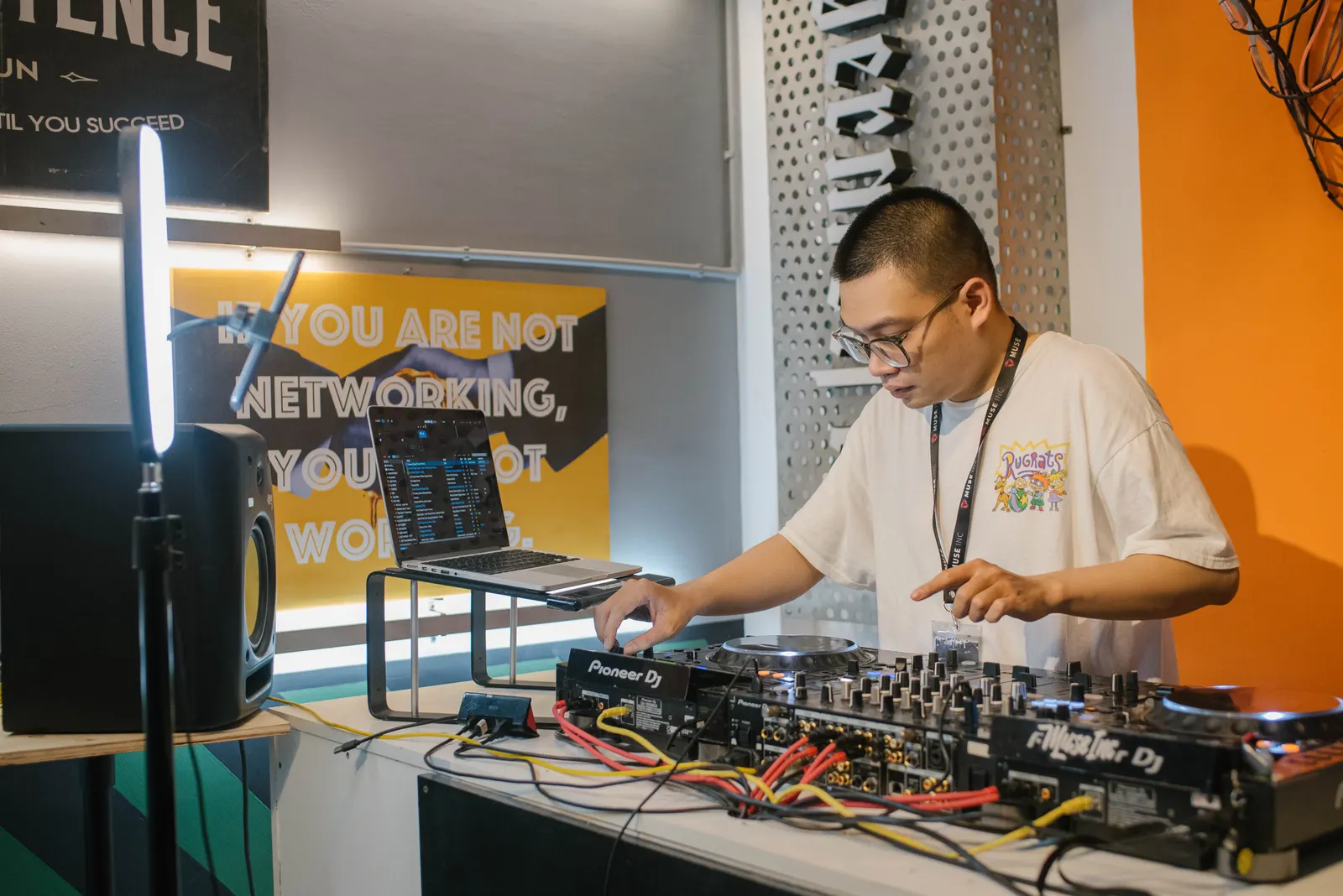
How far can self-teaching take you?
With enough passion and practice, quite far. At home you can learn the software, import and analyse your music, set hot cues, match beats (first with Sync, then by ear), make simple EQ transitions, organise your library and record your mixes.
The trouble starts at the "I can mix, but it doesn't sound great" stage. With nobody next to you pointing out mistakes, they repeat until they become habits. These are the ones we see most often in self-taught students:
- Watching waveforms instead of listening, so beatmatching falls apart without a screen.
- Relying on Sync and getting lost when a track's tempo changes.
- Gain in the red, heavy-handed EQ, two basslines fighting each other.
- Transitions that are on beat but off the phrase.
- Only knowing a controller, and freezing in front of club CDJs and a mixer.
None of that means you shouldn't teach yourself. Just know the traps, and get feedback from an experienced DJ as early as you can. If you're not sure what order to learn things in, follow our 8-step path for beginner DJs.
Learning to DJ on a laptop
If you're serious, start on a laptop. A basic home setup is a laptop that runs DJ software smoothly, a 2-channel controller (real jog wheels, faders and EQ knobs teach your hands the right moves), DJ headphones for cueing, and monitors or decent speakers.
For software, rekordbox, Serato DJ, Traktor and VirtualDJ are the big names, and most have a free version or unlock when paired with a supported controller. If you want to play clubs, we'd start with rekordbox: music prepared in rekordbox and exported to USB plays on Pioneer DJ / AlphaTheta CDJs and XDJs, which you'll find in a lot of booths.
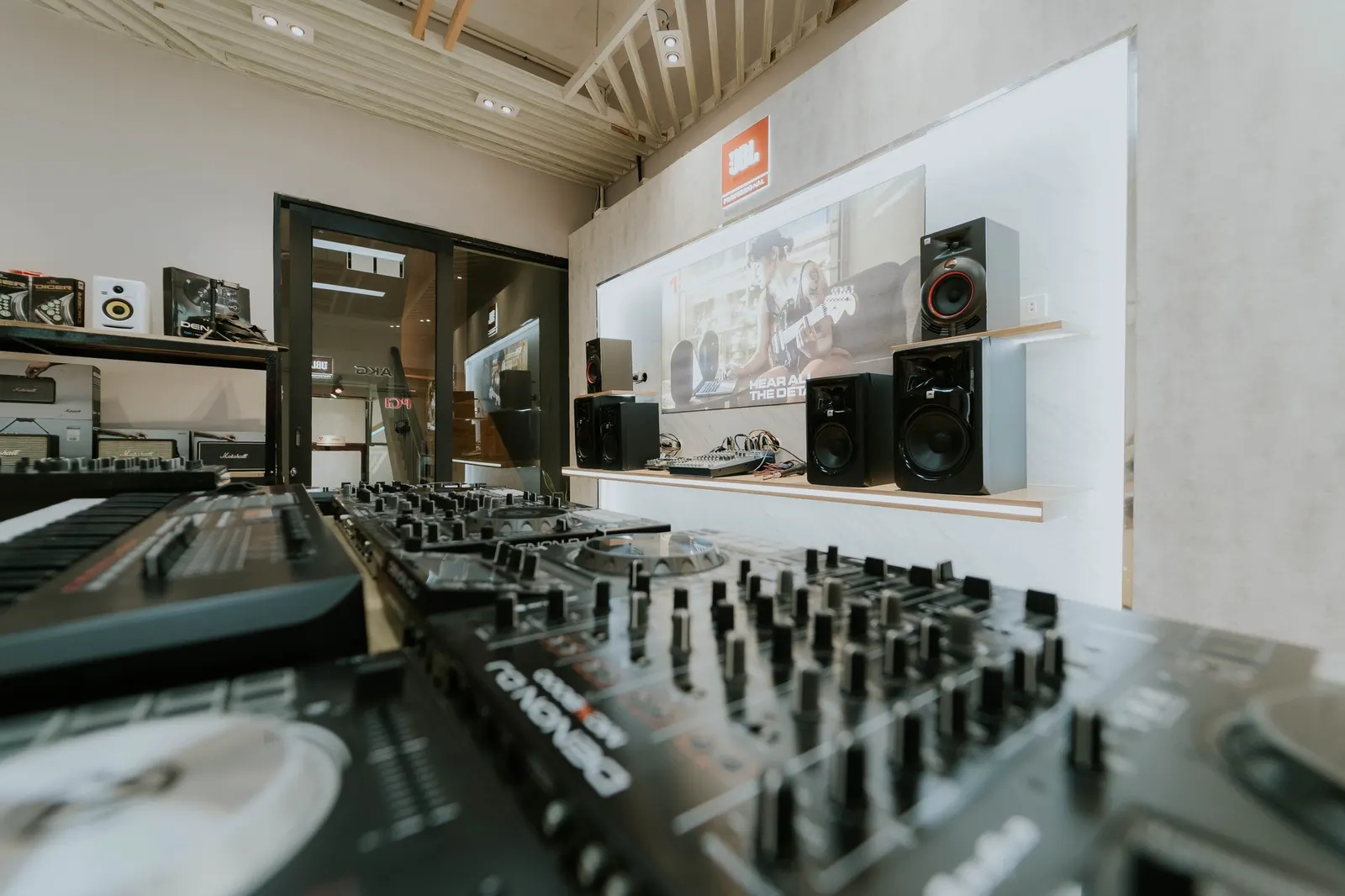
You can mix with just a keyboard and mouse, but you won't develop any feel for it. A 2-channel controller such as the Pioneer DJ DDJ-FLX4, which works with rekordbox and Serato DJ, is a popular first step. Compare DJ controllers and players in the school store before you buy, or try a few in a lesson first.
Learning to DJ on your phone
Phone apps are the cheapest way to try DJing. djay, the mobile version of rekordbox and edjing Mix are all available on iOS and Android and let you play two tracks, adjust tempo, use a crossfader and add a few effects. They're good for understanding the concepts and for practising your ear on the go.
The limits are real, though: a small touchscreen is nothing like a jog wheel or a fader, you usually can't cue the next track in your headphones without a splitter cable or a controller, and phone skills don't carry over well to club gear. Treat a phone as a taster, and move to a laptop and controller as soon as you can.
Free resources worth using
- A free preview lesson: the opening lesson of our Comprehensive DJ Course, "Introduction to DJ", can be previewed free on our website.
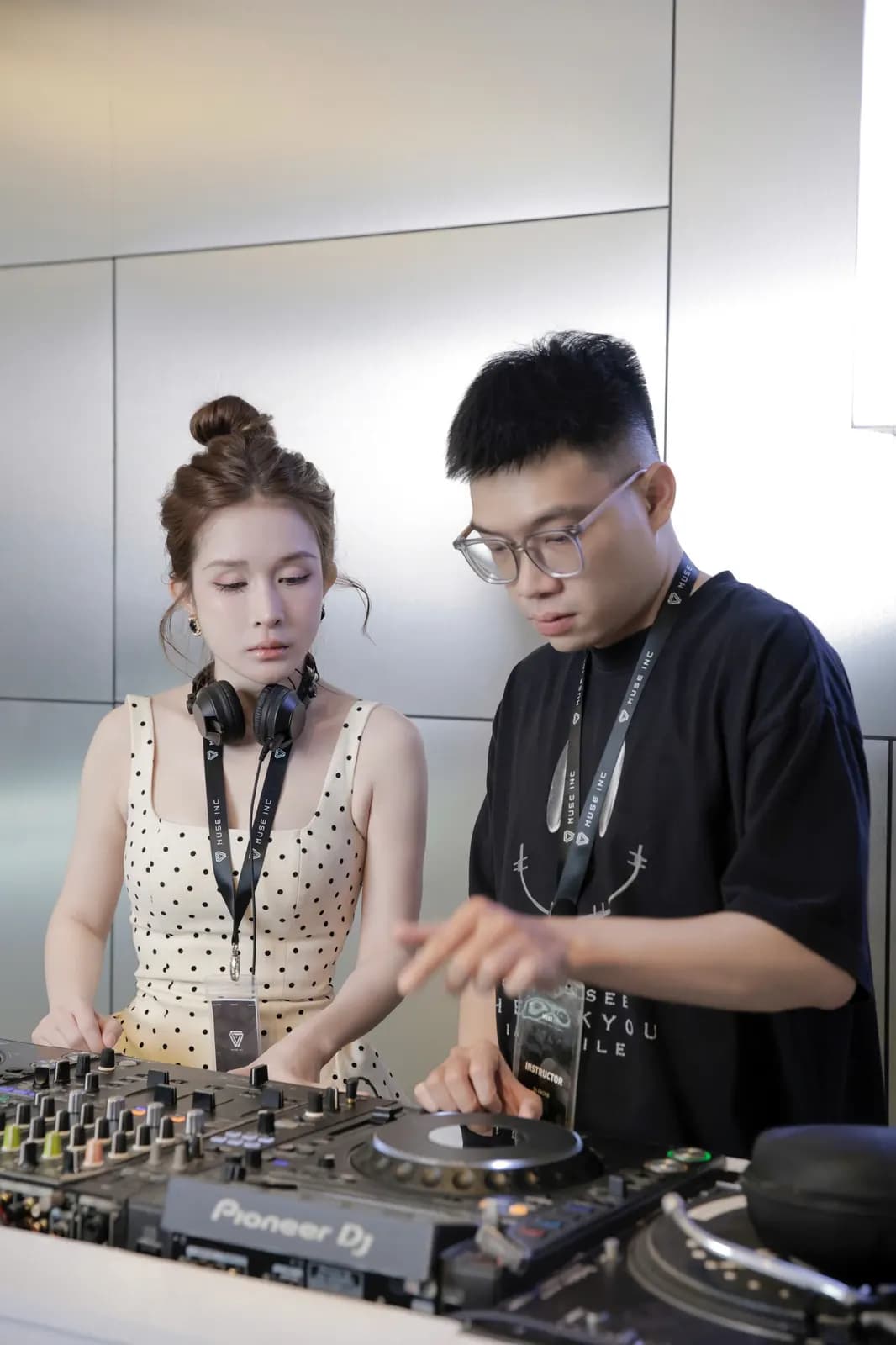
- A free trial lesson: the first lesson of our courses is a free trial. A teacher meets you at the school for an hour, and you get your hands on club gear such as the CDJ-3000 and DJM-A9.
- Free software versions, enough for your first steps.
- Videos from gear makers and DJ communities; our YouTube channel also posts lessons, live sets and talks.
What free resources can't give you is feedback on your own mistakes. Record every practice session and listen back.
Do online DJ lessons work?
Online lessons sit between self-teaching and studio lessons: you stay at home, but a teacher guides you. At Muse Inc, online means a laptop and a controller at home and live lessons with a teacher, following the same course plan. Lesson slides in your student account come in English and Vietnamese, so this works wherever you're based.
Online prices (2026):
- Level 1 — Basic DJ: 8,000,000 VND (about $310)
- Level 3 — Advanced DJ: 15,000,000 VND (about $575)
- Intermediate DJ Course: 15,000,000 VND (about $575)
- Comprehensive DJ Course: 24,000,000 VND (about $920)
- DJ After Hours: 4,000,000 VND (about $155)
- DJ Influencer Course: 8,000,000 VND (about $310)
- Techno or EDM DJ Course: 24,000,000 VND (about $920)
- Urban DJ Course: 26,000,000 VND (about $1,000)
USD figures are approximate, at about 26,000 VND to the dollar.
Online works well if you have a controller, a stable connection and the discipline to practise between lessons. What you miss is the feel of club CDJs, a proper mixer and a big sound system. If you're in Saigon, even for a short stay, you can fill that gap by booking a practice room from 250,000 VND (about $10) an hour, open 9:00–21:00 every day. See which courses run online on our courses page.
When to take lessons in person
- You've been stuck at the same level for weeks.
- You want to play clubs, so you need time on CDJs, a mixer and a real booth.
- You want a structured path with tests, a certificate and deadlines.
- You want to play for a real crowd, like the graduation set at Markshow.
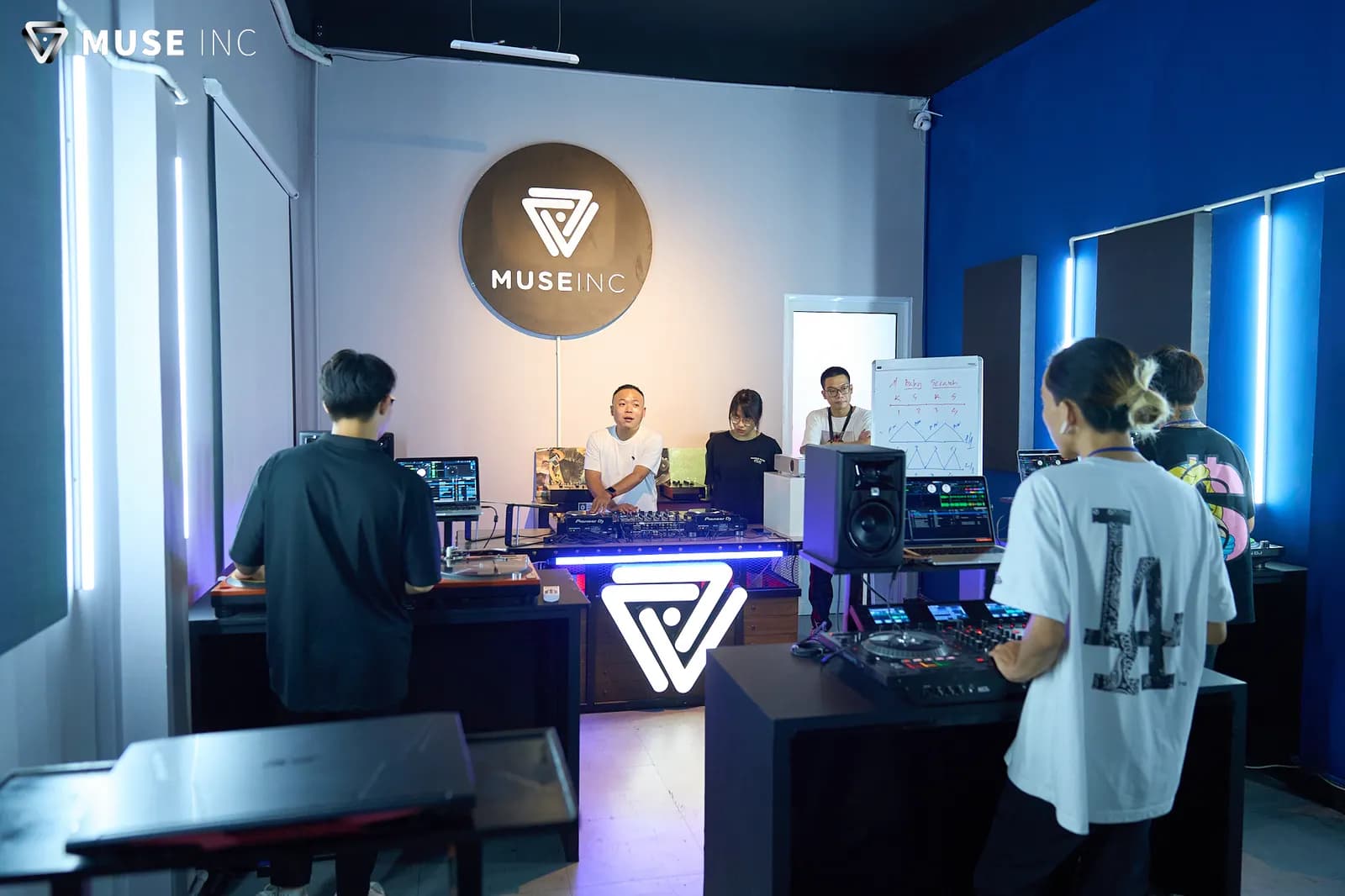
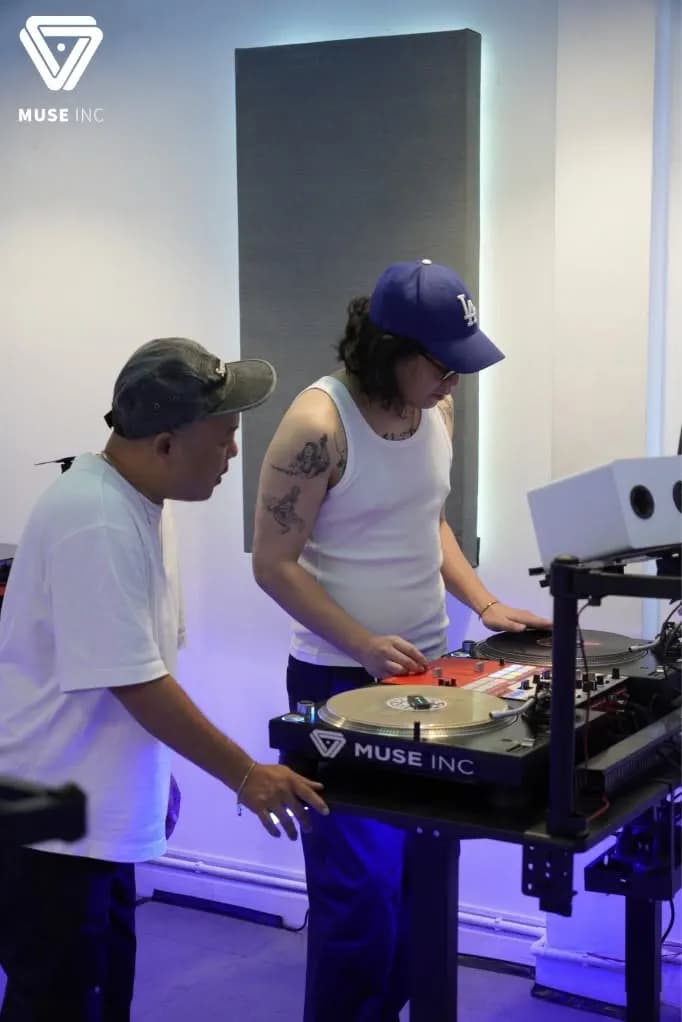
Every lesson at our studio runs on club gear (CDJ-3000, DJM-A9, CDJ-2000NXS2, turntables, controllers), with studio practice hours included. Lessons are in English or Vietnamese, and you don't need to bring any gear. Level 1 is 9 sessions for 8,000,000 VND (about $310) in a group of up to 4, or 9,500,000 VND (about $365) one-on-one. All prices are on our price list.
FAQ
It depends on how much you practise. Getting comfortable with the gear and simple transitions usually takes a few weeks of regular practice. For comparison, our Basic course gets beginners to their first 15-minute set in 9 sessions, about 3 weeks.
To learn the concepts, yes. But touchscreens feel nothing like controllers or club gear, so sooner or later you'll need a laptop and a controller.
Any of rekordbox, Serato DJ, Traktor or VirtualDJ. If you're aiming for clubs, rekordbox is the practical choice, since it prepares USBs for CDJs and XDJs.
A laptop, a controller and headphones. Lessons are live with a teacher.
Yes. The first lesson, "Introduction to DJ", is a free trial at the school, and you can preview it on our website first.
Wondering where your self-taught skills stand? Book a free trial lesson at Muse Inc, at the back of 409 Hai Bà Trưng, Xuân Hòa Ward (District 3), or message us on Zalo at 0902 957 911. A teacher will help you find the right level, so you don't pay to relearn what you already know.