Bar sound system: what you need and suggested setups
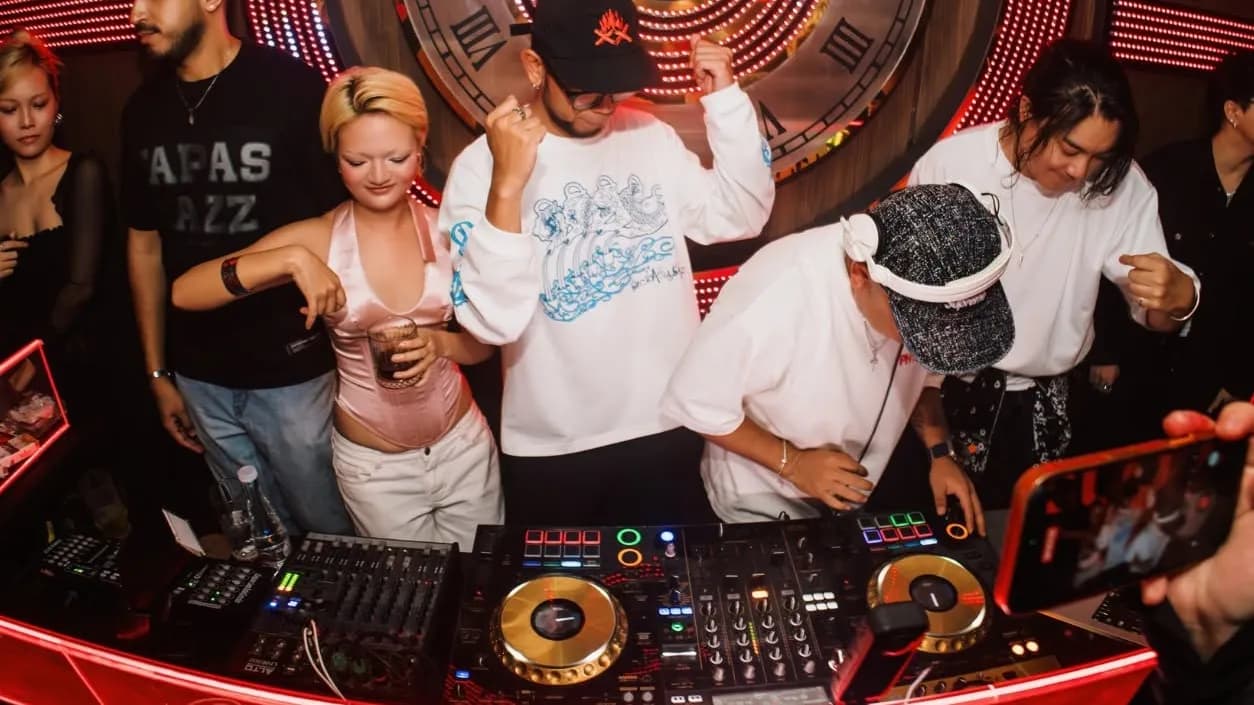
A bar sound system has five building blocks: main (full-range) speakers, subwoofers for the low end, a mixer, a signal processor (DSP) with amplification, and a DJ booth with its own monitor. This guide is for owners and managers of bars, lounges and cafés with DJs in Ho Chi Minh City (Saigon), Vietnam: what each part does, which setup fits your kind of venue, and why soundproofing and tuning matter as much as the speakers you buy.
The best system is rarely the loudest. It is the one where every table hears clearly, the DJ plays comfortably and the neighbours stay friendly.
What a bar sound system is made of
Main speakers: what your guests actually hear
Full-range speakers (often called tops) carry the mids and highs: vocals, hi-hats, synths. Where they hang and how widely they cover the room matters more than the wattage on the box. Active (powered) speakers have the amplifier built in; compact and simple, they suit most venues. Passive speakers need a separate amplifier and make sense for many speakers, long cable runs or ceiling installs. For even background music, several wall, ceiling or column speakers cover a room far better than two big boxes in one corner.
Subwoofers: the low end that makes it feel like a club
A subwoofer handles the deep bass: the kick drum and the bassline. House, techno, hip-hop and Vietnam's own Vinahouse depend on it; a café that only plays background music may not need one. Subs are also the main source of vibration through floors and walls, so placing them is a soundproofing decision as much as a sound one.
The mixer: where every source meets
The venue mixer takes the DJ setup, the MC's microphone, the background music player and any band, and sends the result to each speaker zone. Size it to the sources you really use plus a few spare channels. A DJ mixer blends tracks during a set; a venue mixer manages the whole system. A bar with DJs usually needs both.
DSP and amplification
The DSP is the brain of the system. It splits frequencies between tops and subs (crossover), corrects EQ for the room, delays distant speakers so they line up in time, and limits the output to protect the speakers and hold the volume where you set it. Many venues skip it because the speakers already make sound, but this is the box that turns a pile of speakers into a system. Amplifiers drive passive speakers and must match their impedance and power handling.
The DJ booth and its monitor
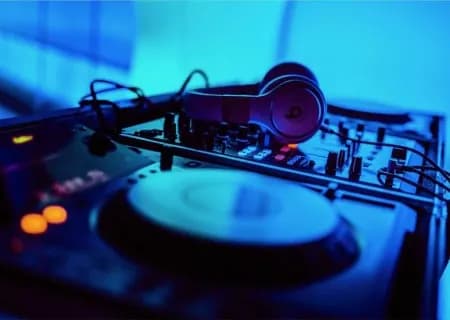
A DJ who hears only the main speakers across the room gets delay and reflections, which makes beatmatching hard. One or two booth monitors on their own feed are the minimum. For the booth itself (players and DJ mixer), see our DJ equipment category.
Suggested setups by size and type of venue
There is no honest "so many square metres need so many watts" formula: ceiling height, glass versus brick, seated guests versus a packed floor all change the answer. Here is how a first setup is sketched for three common kinds of venue; real numbers come after a site visit.
Cafés and small rooms
- Main speakers: wall or ceiling speakers with even coverage.
- Subs: none, or one small sub.
- Control: a small mixer, with zones if there is a terrace or a second floor.
- DJ booth: usually none.
The goal is pleasant background music that sounds the same at every table and still lets people talk: many small speakers at a moderate level beat two big ones turned up.
Lounges and restaurants with DJs
- Main speakers: a few tops around the main area, fill speakers for corners.
- Subs: one or two.
- Control: a multi-channel mixer and a DSP with zones.
- DJ booth: a compact booth with a monitor.
Background music by day, a DJ or band at night: the system should switch between the two without rewiring, which a DSP with stored presets does well. Put the booth where the DJ can see the guests and hear the main speakers.
Bars and clubs with a dance floor
- Main speakers: large tops aimed at the floor, delay speakers for far areas.
- Subs: several, carefully placed.
- Control: a DSP is essential, with limiters.
- DJ booth: a full booth with its own monitors.
The floor wants high sound pressure and a solid low end while the bar still holds a conversation. At this scale, a design on paper and measurements on site are not optional.
Soundproofing and tuning: the part many venues skip
Soundproof first, buy speakers second
Bass travels through walls, floors and ceilings far more easily than treble, so soundproofing belongs in the fit-out: heavy walls, sealed doors, subs decoupled from the floor on isolation pads or platforms. Vietnam has a national technical regulation on noise (QCVN 26:2010/BTNMT); if you are near residents, check it and the local rules before settling on how much power to install. Inside, acoustic ceilings, curtains and upholstered seating cut the echo, so music sounds clearer at the same level.
Tuning after installation
The same equipment sounds completely different tuned and untuned. Tuning means level-matching tops and subs, room EQ, delay for distant speakers and limiter settings, followed by a short staff handover: the power-on order, volume by time of day, and keeping the mixer out of the red.
Venue projects by Muse Inc
Besides teaching DJs, Muse Inc designs and installs sound for venues. A concrete example is the Lounge Paradise sound project: one building, three floors, three different needs.
- First floor, a lunchtime café for office workers that needs background music: Audiofrog AW 25 wall speakers, Wharfedale Pro Typhon AX8BT active speakers, a Wharfedale Pro SW 12 subwoofer, a Wharfedale Pro CPD 1000 amplifier and a Soundcraft Signature 10 mixer.
- Second floor, the main area with DJ sets and live bands: Wharfedale Pro Typhon AX12BT active speakers, a Wharfedale Pro T-Sub AX15BT active subwoofer, a Versadrive SC-26 processor, JBL VM200 microphones and a Soundcraft Signature 12 mixer.
- Third floor, VIP rooms that need privacy and karaoke.
The lesson: one purpose per floor means one setup per floor. A single speaker model across a whole building usually costs more and sounds worse.
Our sound for venues service page lists more spaces we have worked on, including XU Lounge, The Primal Performance Lab, Kingsman Speakeasy Lounge, Simya Nha Trang, Happy Life and Loco 5; Indigo Bar in the former District 2 is among our earlier projects. Brands we install include Pioneer DJ, Denon DJ, Numark, JBL, KRK and Wharfedale Pro.
What drives the cost of a bar sound system
Two venues of the same size can differ several times over, so we do not publish a one-size package price. The budget depends on:
- The programme: background music, DJs, live bands or karaoke.
- The space: floor area, ceiling height, floors, zones that need separate control.
- The target volume, especially on a dance floor.
- Existing soundproofing and finishes.
- All-new equipment or reusing gear that is still good.
- Installation: in-wall cabling, rigging, racks.
- Tuning, staff handover and support after opening.
List prices for individual items, in Vietnamese dong (VND), are in our store: PA speakers, subwoofers, mixers, amplifiers and column speakers. A quote for a whole system is only accurate after a site visit.
Hosting DJs only a few nights a month? Rent DJ equipment by the day before buying a full booth, and if you need the DJ too, see DJs for bars and clubs.
How a venue project with Muse Inc runs
- Site visit and listening: we come to the venue and hear what you plan to run there.
- Proposal: equipment list, layout and quote.
- Installation: cabling, rigging and connections.
- Tuning and staff training.
- Support after opening night.
Frequently asked questions
Not necessarily. For background music at a moderate level, good full-range speakers are enough. Once you add DJs, electronic music or hip-hop, a small sub makes the sound fuller and warmer without pushing the main speakers too hard.
Active speakers mean fewer boxes and simpler operation, which suits most small venues and lounges. Passive speakers with separate amplifiers suit larger systems, ceiling installs and long cable runs, and parts are easier to replace one at a time. Decide from the speaker layout, not from habit.
It is not a good idea. A DJ mixer is built for blending tracks and usually has very few microphone inputs; a venue mixer handles every source and feeds each zone. Venues with DJs normally keep the DJ mixer in the booth and connect it to the venue mixer or the DSP.
Plan soundproofing during the fit-out, decouple the subs from the floor, aim speakers into the room and set limiters in the DSP so the level stays where you agreed for each time of day. Check local rules on opening hours and noise before you open.
Usually, yes. A full room of people and furniture changes the acoustics, so the sound often needs adjusting after the first few nights; support after opening night is the final step of every Muse Inc venue project.
Opening a venue or upgrading your current system? Book a site visit, or message us on Zalo or WhatsApp at +84 90 2957 911. We are open 9:00–21:00 every day at 409 Hai Ba Trung St., Xuan Hoa Ward, Ho Chi Minh City (rear entrance).