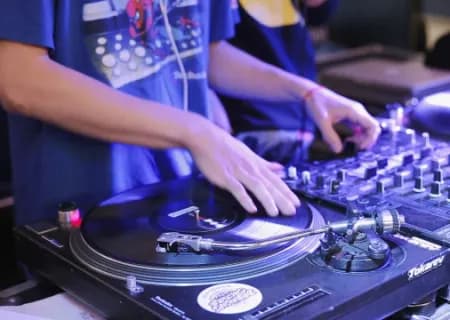
8 DJ Scratching Techniques You Should Know
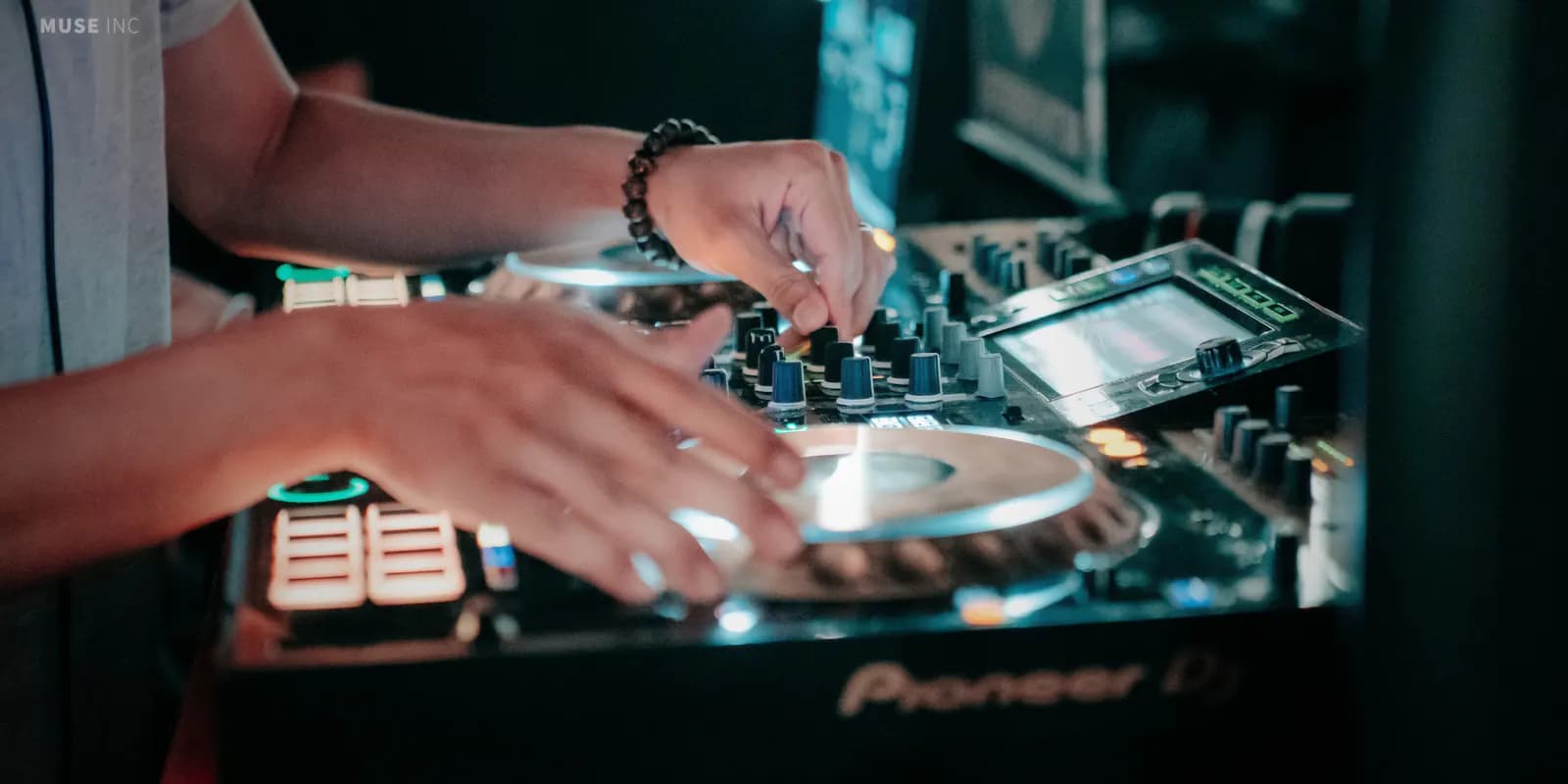
Scratching is not only a key part of the art of DJing but also a way to show your creativity and originality in your performance. From subtle moves to powerful sound effects, scratching creates special highlights in DJ sets and live performances.
In this article, we share 8 scratching techniques, from basic to advanced. Whether you are just starting out or already have some experience, the tips and guidance from MUSE INC will help you go further on the road to becoming a professional DJ.
1) Baby scratch
This is the simplest and most basic scratching technique. DJs can use it to make transitions between tracks smoother.
To do a baby scratch, place your hand on the platter and move it back and forth continuously to create the sound. The sound changes depending on how fast your hand moves.
2) Forward scratch
The forward scratch uses the same motion as the baby scratch, but you close the fader as you pull the platter back, so the only sound you hear is the forward push.
- Step 1: Find the start of the sound you want to scratch (a sample, a sound, an a cappella…) and mark it with a marker in Serato or on the record.
- Step 2: Push the platter forward with the fader open so you hear the sound, then close the fader as you pull the platter back so it is silent.
3) Backward scratch
Like the forward scratch, but you close the fader as you push forward and open it as you pull the platter back.
4) Stab scratch
Like the forward scratch, but you close the fader as you push forward and open it as you pull the platter back.
5) Tear scratch
Also known as the “Twitter scratch”, the chirp involves closing and opening the fader. Done quickly, it creates a sound like a bird chirping.
6) Chirp scratch
This is a more advanced technique than the baby scratch, with more complex movements of the hand on the platter (the record hand).
7) Flare scratch
A scratch done with the fader open. You push the platter forward while quickly closing and opening the fader to cut the sound into two beats.
8) Transformer scratch
A scratch for long samples, done by opening and closing the fader continuously.
Classes of up to 4 students. A dynamic, creative learning environment.
Classrooms designed and decorated in a modern, youthful and energetic Western style.
Well-known instructors with real performing experience, professional and dedicated.
Modern facilities built to international standards with equipment from HARMAN International.
The chance to perform at major music festivals, game shows and well-known bars and clubs


Want to practise this with a teacher? The beginner DJ course (Level 1) takes you from the gear to your first set in three weeks, on the school's CDJs and controllers.