Where to Find a Reputable DJ School? How to Choose the Right DJ Academy in HCMC
Where to find a reputable DJ school is a question best answered through a transparent curriculum, dedicated hands-on practice time, and how instructors provide constructive feedback. If you are looking for a place to learn DJing in Ho Chi Minh City, schedule a trial lesson to test these factors firsthand before enrolling. This guide will help you evaluate each key criteria and explore the training pathways at Muse Inc.
Start with Your Career Goals & Vision
Before comparing DJ academies, define the exact context in which you want to perform. A set—a multi-track live performance—curated for an intimate private event requires a completely different track selection and programming approach compared to a genre-specific set. Clarifying your goal makes it much easier to ask the right questions about what you need to learn.
If you have never touched a DJ setup before, start with critical listening (rhythm/tempo identification), understanding track structures, and sound/gain control. If you are self-taught, write down specific pain points: abrupt transitions, beat drifts, or struggling to maintain musical flow/energy. This tangible checklist is far more useful than simply labeling yourself a complete beginner or experienced.
You should also map out a realistic schedule. Digging for music, practicing techniques, and reviewing recorded sets all require time outside of class. A suitable program must fit comfortably within a schedule you can maintain consistently.
Evaluating a DJ Academy with Concrete Proof
Curriculum Structure & Feedback Mechanisms
Ask to see the module-by-module syllabus and assessment criteria for each phase. After learning beatmatching, you should know exactly what skills you will achieve, what practical exercise tests that capability, and how to practice if you fall short. This clarity allows you to track your own progress objectively.
During your consultation, try asking: “If two tracks keep drifting out of phase/tempo, how will you guide me to troubleshoot it?” You should receive a clear, logical explanation paired with a practical training exercise. Additionally, confirm who your primary instructor will be and how feedback is provided between classes.
Verifiable Studio Practice Hours
Total course sessions do not reveal how much actual time you spend behind the decks. For group classes, ask about class size, equipment ratio, and individual deck time per student. For 1-on-1 private lessons, ask how sessions are divided between instruction, hands-on practice, and set playback/critique.
Off-hours studio practice time should also be explicitly detailed: Is practice time included in the tuition fee, how do you book practice slots, and is an assistant on site for technical support? When touring the studio, check slot availability during your preferred free hours. Convenient studio access makes your practice routine far more realistic.
Gear Aligned with Your Goals
Look beyond the equipment featured in promotional photos. Ask whether your specific course utilizes controllers, CDJs, or turntables—and why. For beginners, understanding gear layout and mastering physical control is foundational. For those aiming to perform live, you need to know how the program prepares you for real-world gig scenarios on industry-standard equipment.
Be sure to ask whether you need your own equipment, especially for online learning. Confirming these hardware requirements upfront helps you budget accurately and avoids enrolling in a format unsuitable for your home setup.
Training Pathways at Muse Inc
In Muse Inc's DJ course catalog, the skill-based levels include Basic DJ, Intermediate DJ, and Advanced DJ. The Comprehensive DJ Course combines Levels 1 through 3 into a single continuous program. Use the reference table below to prepare your questions during consultation:
ProgramCore Syllabus Focus Basic DJ Controllers, beatmatching, EQing, and building your first short set Intermediate DJ CDJ, turntables, transitions, and energy flow management Advanced DJ Scratching, beat juggling, stage performance, and career orientation Comprehensive DJ Combines Levels 1–3 into a complete training pathway
Note: EQing refers to frequency adjustment (Low, Mid, High); scratching refers to turntablism manipulation on vinyl/jog wheels. You do not need to master these techniques prior to researching courses. The key is determining an accurate entry point that matches your current background.
The Comprehensive DJ Course offers end-to-end training from foundational skills to stage performance, complete with studio practice hours and a graduation set at the Markshow event. If you want a seamless training journey, review the detailed syllabus and ask about schedule arrangements before enrolling.
Utilizing a Trial Lesson to Test Compatibility
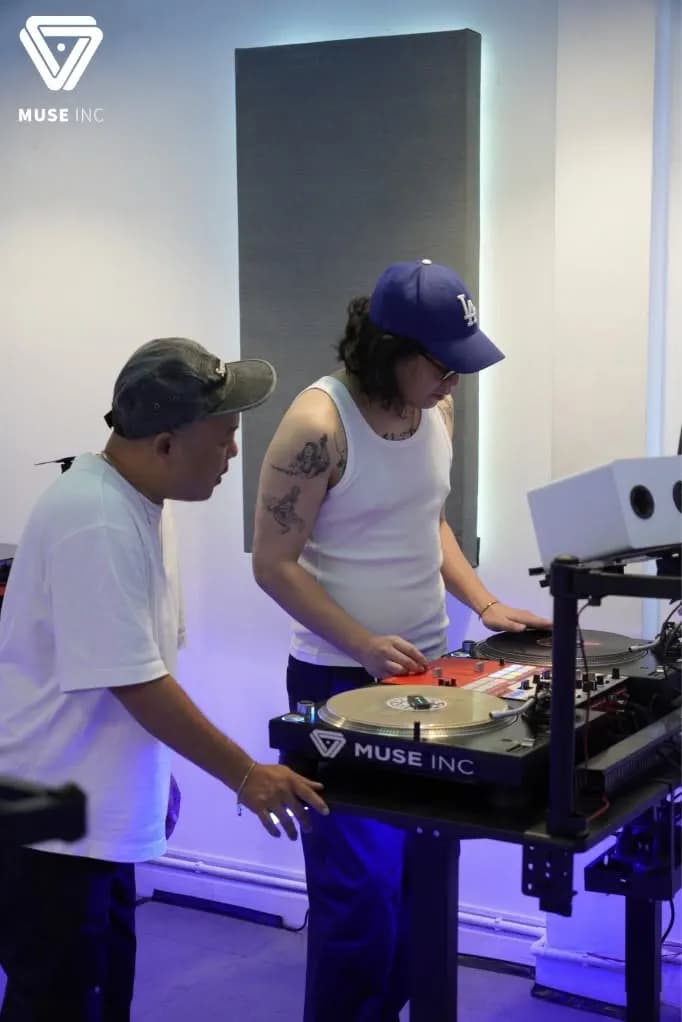
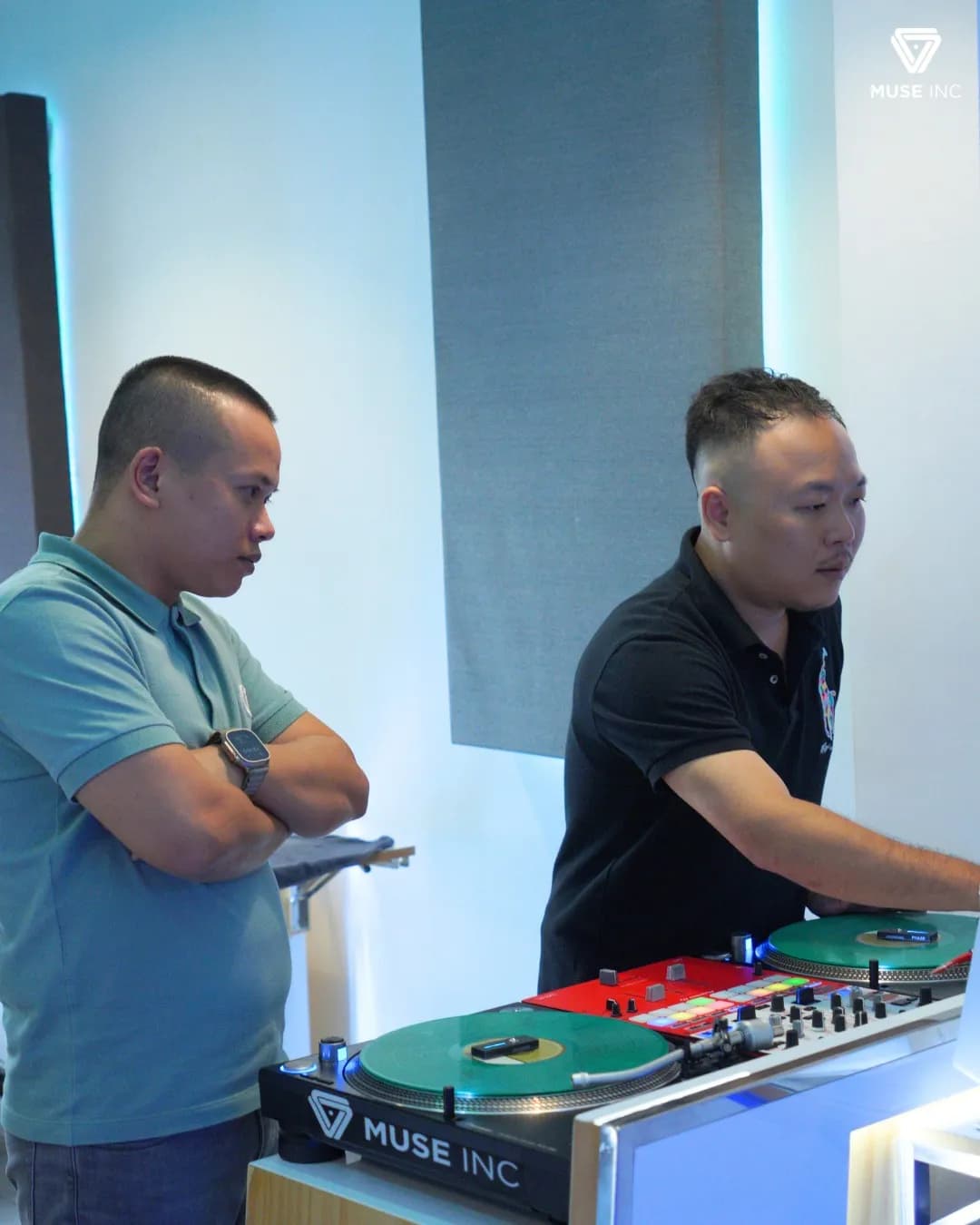
A trial lesson should give you a clear sense of the teaching methodology and your rapport with the instructor. Bring a few of your favorite tracks or a recorded set if you have practiced on your own. State clearly whether you are learning for leisure, technical skill development, or career preparation, along with the weekly time commitment you can make.
Consider asking these key questions during your session:
- Based on my current experience, which module should I start with?
- What exact hardware setup will I practice on in the official course?
- When I make a technical error, what targeted exercise will be used to correct it?
- Which learning format (1-on-1 vs. Group) best fits my schedule and goals?
- What does the tuition fee cover in terms of class hours and studio practice time?
After the trial, assess your experience: Did you get adequate deck time, did you understand the instructions clearly, and do you know your immediate next step? If you are still deciding between private or group classes, explore details on 1-on-1 DJ Lessons at Muse Inc to prepare for your discussion.
Comparing Tuition, Schedules, and Enrollment Policies
When requesting tuition details, ask for the exact fee structure for your chosen course and format. Cross-reference total session hours with the syllabus content, included studio practice hours, and any potential extra costs. You can review Muse Inc's current tuition schedule and verify your choice directly with an admissions advisor.
Class scheduling directly impacts your completion rate. Ask about rescheduling policies, make-up classes, and options for pausing your studies if needed. If you work shift hours or travel frequently, state this upfront. A manageable, flexible schedule is far more beneficial than an overly dense timeline that leads to missed sessions.
Preparing for the Transition from Studio to Stage
Practice building a complete set and record it from start to finish. Listen back to evaluate your intro, transitions, energy arc, and outro. A set with noticeable flaws is still valuable if you can identify the weak points and bring the recording to discuss with your instructor.
Save your practice recordings by date and write brief notes on your objective for each session. If you need to reinforce core concepts, an 8-step beginner DJ guide serves as a helpful reference. Goal-oriented practice allows you to evaluate your stage-readiness based on concrete technical abilities.
Frequently Asked Questions (FAQ)
Can I learn DJing without a background in music theory?
Yes. You can start learning DJing without prior music theory knowledge. Muse Inc's catalog includes a Basic course designed for your very first mixes on a controller. Communicate your current level clearly during your trial lesson so an advisor can recommend the correct starting module.
How long does it take before I can land gigs?
The timeframe for getting gigs depends on your technical skill, practice consistency, and specific venue requirements. Ask your instructor to review a complete live set and assess your readiness in real-world performance scenarios. Course duration serves as a timeline for planning your learning—not a guaranteed employment timeline.
Do I need to buy DJ equipment before enrolling?
No. In-studio classes at Muse Inc utilize the school’s professional hardware setups. For online learning, you will need to confirm laptop and DJ controller requirements prior to enrollment. It is best to experience a lesson first, clarify your goals, and calculate your budget before buying gear for home practice.
Experience Hands-on DJ Training Before Enrolling
To answer where to study DJing reputably, evaluate the curriculum transparency, teaching methodology, and studio practice facilities. Book a free trial lesson at Muse Inc to experience the training environment directly before choosing your learning path.