DJ Basics for Beginners in Ho Chi Minh City (Saigon)
DJ basics for beginners start with listening, choosing music, understanding the equipment and learning to connect tracks. You can begin without having studied music theory or played an instrument. What matters is making time to practise, reviewing what you hear and asking useful questions when something sounds wrong.
If you live in or are visiting Ho Chi Minh City (Saigon), Vietnam, lessons in English can help you explore the craft with guidance. Start with a clear goal: understand mixing, develop a creative hobby or build foundations for further training. You can decide how far to take it as your experience grows.
What does learning DJ basics involve?
A DJ selects music and links tracks into a continuous listening experience. That involves musical decisions as well as equipment controls. You need to consider which track comes next, when to introduce it and how the transition changes the energy.
At the beginning, aim to understand the purpose of each action. If you turn a control, listen for what changes. If a transition feels awkward, identify the problem before adding another effect. Learning becomes more manageable when you can describe what you are trying to improve.
Prepare for your first lesson
Bring a short list of tracks you enjoy and explain what attracts you to them. Familiar music gives you a useful reference when listening for structure, energy and changes in sound. You do not need to impress your teacher with obscure or technically difficult selections.
Check what the school provides and what you should bring. For online learning, confirm the computer, controller, software and connection requirements before the lesson. Ask about equipment before buying anything, especially if you have not decided whether to study in person or online.
Look at your weekly schedule, too. Allow time for listening and independent practice between lessons. If you are visiting Saigon, share your travel dates early and ask which timetable is realistic. A course needs to fit the time you can actually give it.
From listening to your first recorded mix
Understand the equipment and software
Start by following the sound. Which track is playing through the speakers? Which one are you previewing in the headphones? Learn to identify play, cue, tempo and volume controls on the equipment you are using.
Keep your first music collection manageable. Organise tracks so you can find them, and check that the files load correctly. When you need software guidance, use the official rekordbox tutorials and choose material relevant to your version. Understanding a small set of functions is more useful than rushing through every feature without testing it.
Listen for structure and choose transition points
Listen to a whole track and notice where instruments enter, vocals begin or the energy changes. Choose a point where you think another track could enter, then test that idea. Pay attention to whether the musical parts support each other.
Phrasing means considering musical phrases when timing a transition. If two vocal sections compete, try a different entry point before reaching for effects. Changing when a track begins can make more sense than trying to disguise an awkward combination. Keep notes on choices that sound convincing and explain why you prefer them.
Match beats and control the sound
Beatmatching means aligning the tempo and beats of two tracks. Listen carefully while making adjustments, and compare the result before and after each change. Moving several controls at once makes it harder to understand which action helped.
EQ, or equalisation, adjusts frequency ranges such as bass, midrange and treble. Listen to how two tracks interact when they overlap, especially their bass parts. The AlphaTheta beginner guide explains these fundamental controls. During practice, focus on one adjustment at a time and listen to its effect rather than copying a position without understanding it.
Explore loops, effects and set building
A loop repeats a section of music. Effects alter the sound. Test each function separately so you understand what it contributes before using it during a transition. If an effect makes the result harder to follow, return to a simpler version.
Next, connect several tracks into a short set: a sequence with a clear direction. Think about the opening mood, how the energy develops and how you want to finish. Listen to the complete sequence without touching the equipment. Does the next track fit what came before, or does it feel like an unrelated choice?
Record, review and practise performing
Finish a practice recording before judging every detail. Afterwards, note the time of a problem and describe it specifically: drifting beats, an abrupt volume change or a transition that interrupts the mood. Choose one issue to work on next.
Save both the earlier recording and your revised attempt. Compare the same passage in each. If you cannot explain the difference, bring both versions to a lesson and ask what to listen for. This gives your teacher a concrete starting point for feedback.
When you feel comfortable, play for a friend and ask where their attention dropped. Practise starting, ending and continuing after a mistake. Treat this as rehearsal, with room to learn, rather than proof that you are ready for every performance situation.
Teach yourself or learn with an instructor?
Self-study can help you explore software and discover whether mixing interests you. It works best when you actively test instructions, record your attempts and check the results. The challenge is recognising why something sounds wrong when several possible causes overlap.
An instructor gives you someone to question and a chance to repeat an exercise after feedback. When comparing lessons, ask how recordings are reviewed, what independent practice is expected and what happens if a topic needs more time. Choose a format that supports the way you learn and the schedule you can maintain.
Turn practice into a repeatable routine
Begin each session by listening to the passage you wanted to improve last time. Name the problem before touching the controls. You might decide to focus on a sudden volume jump or a vocal overlap. Choose one possible correction, test it and save the result so you can compare your attempts.
Keep a simple practice notebook with the tracks used, the point where you started the transition and what you changed. Avoid judging a whole session as good or bad. A useful entry explains what happened and what to try next. Bring that information to your next lesson if the problem remains unclear.
Finish with an uninterrupted run through your short set. This gives you a chance to connect individual exercises into a complete sequence. Afterwards, note one improvement and one remaining question. Your next session can then begin with a specific task instead of repeating familiar tracks without knowing what you are working towards.
Starting beginner DJ lessons at Muse Inc
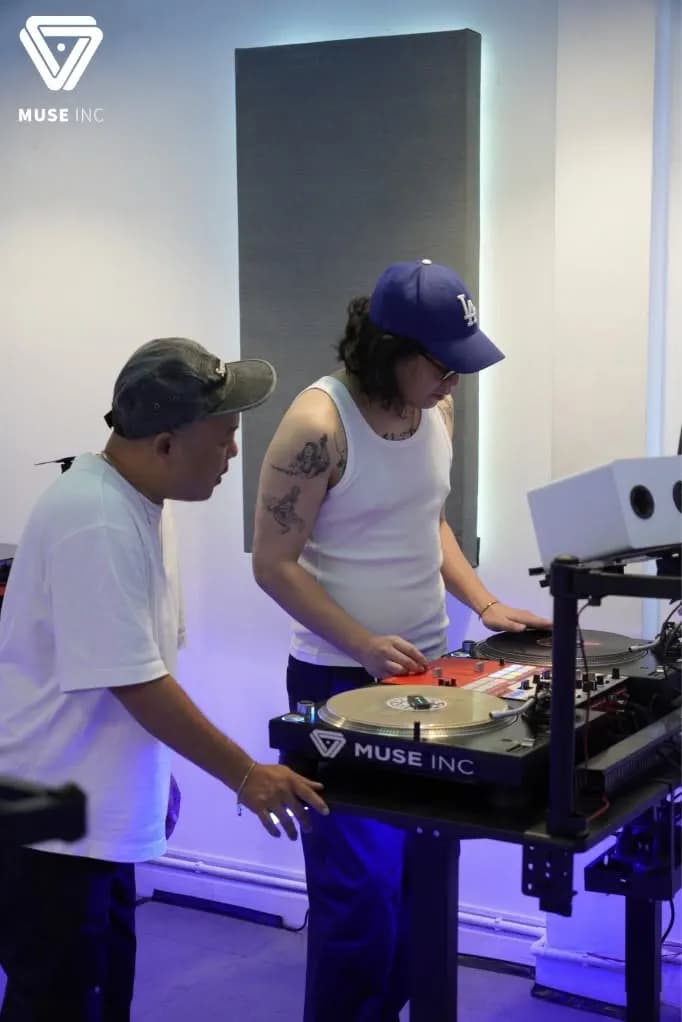
Muse Inc offers lessons in English and Vietnamese. Mention your language preference when arranging a trial, and explain whether you are completely new or have already experimented with mixing. The Level 1 — Basic DJ course introduces equipment, beatmatching and basic mixing.
Ask about private, group and online options, then confirm the programme, practice arrangements and equipment requirements for your chosen format before you enrol. Online learners need a laptop and controller. If you are studying at the school, ask what equipment is provided before considering a purchase.
For international learners, the guide to learning to DJ in Vietnam covers practical planning. Review the DJ lesson prices and duration guide, then confirm your selected option. Include travel and practice in your planning, alongside the lessons themselves.
Frequently asked questions
Yes. You can begin learning DJ skills without previous instrument lessons or formal music study. Expect to spend time listening, learning controls and repeating exercises. Tell the instructor what experience you have so they can discuss a suitable starting point. Your first goal should be understanding the basics and practising them consistently.
Ask the school what is provided before buying equipment. Your needs depend on whether you will study at the studio or online, and where you will practise between lessons. Muse Inc's online course information specifies a laptop and controller. Confirm compatibility and the full setup before committing to that format.
Completing a beginner course does not automatically prepare you for every booking. Readiness depends on your skills, preparation and the event's requirements. Ask an instructor to review a representative mix and discuss what still needs work. Be clear about your experience when considering opportunities, and avoid promising a performance you have not prepared for.
Take the first step at the decks
Learning DJ basics for beginners becomes more concrete when you can try the controls and hear what changes. You can book a free trial lesson at Muse Inc to explore the equipment with a teacher, discuss lessons in English and choose a suitable starting point in Saigon.