Artificial Intelligence: The Next Step for Electronic Music in the 4.0 Era?
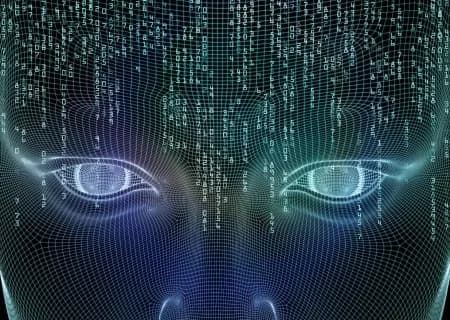
Imagine the DJ Mag Top 100 DJs 2030 awards where, for the first time in history, the top spot goes to an artist created by artificial intelligence (AI). Clearly, DJs and producers would hardly be thrilled to be replaced by machines. The same goes for just about every profession in the era of the fourth industrial revolution. A 2017 study predicted that the world would lose 800 million jobs by 2030. In theory, though, creative jobs such as painters, photographers and producers are harder to replace — at least for now.
That doesn't mean technology can't write music in place of humans. In fact, it has been doing so to some extent for decades. Back in the 1950s, the composer Lejaren Hiller released the first piece of music generated by a computer, the “Illiac Suite”. In the 1990s, David Bowie introduced the Verbasizer, software that randomly combined raw material to write lyrics. More recently, Sony's Flow Machines AI played a big part in writing “Daddy’s Car” in 2016, and in the track “Hate Me” released last year by producer Baauer with vocals by the AI character Miquela.
But producers needn't worry too much, because technology is there to help people, not to replace them entirely. That's the view of Siavash Mahdavi, founder and CEO of AI Music: “What we're doing is making music creation accessible to more people by making it simpler.
Look at photography: there's plenty of photo software, yet there's no shortage of brilliant photographers taking truly artistic pictures. Making music is the same — we'll simply have more people excited about it and committed to it.”
Beyond helping producers make music, AI will also be used in many other areas of the electronic music industry. Recently, at Wired Music Week, Asia's biggest electronic music conference, Hazel Savage — CEO of Musiio, a pioneer in applying AI to music — talked about many new uses of AI: finding and discovering talent more efficiently, searching for quality samples and music, and gathering data on current listening trends in the market.
At a time when AI is being applied to every part of life, electronic music can't stay out of the global trend. And applying AI will surely bring many breakthroughs to the electronic music industry.
Source: VNSound